
Duncan Ferguson Biography: The Fearless Everton Hero Who Inspired Fans but Endured Pain and Controversy
The complete life story of a towering Scottish striker whose journey mixed fame, family, football glory, injuries, hard lessons, and a legacy that still commands respect.

Introduction
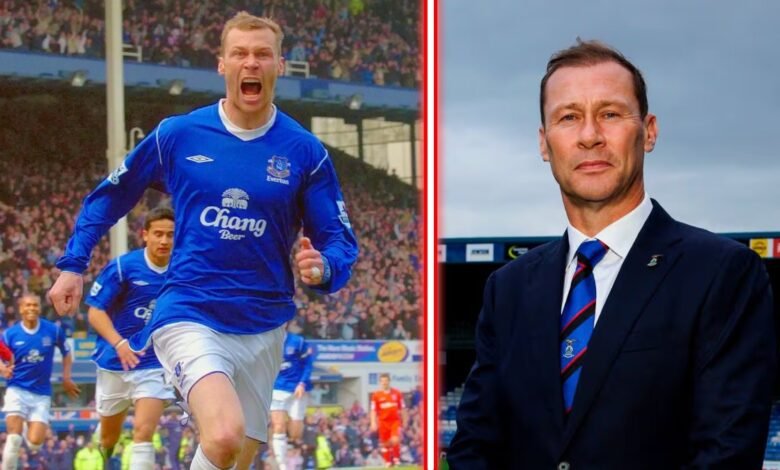
Duncan Ferguson remains one of the most unforgettable personalities of modern British football. He was powerful, emotional, confrontational, and deeply loyal to the clubs he loved most. Supporters did not admire him because he was polished. They admired him because he felt real every time he walked onto the pitch.
His story includes major transfers, famous goals, prison, injuries, coaching, and a lasting bond with Everton. Few football biographies combine so much triumph and trouble in one career, which is why his life continues to attract both football fans and general readers.
Table of Contents
ToggleQuick Bio
| Field | Details |
|---|---|
| Full name | Duncan Cowan Ferguson |
| Nickname | Big Dunc |
| Date of birth | 27 December 1971 |
| Age | 54 |
| Birthplace | Stirling, Scotland |
| Nationality | Scottish |
| Height | 1.93 m |
| Playing position | Striker |
| Spouse | Janine Ferguson |
| Children | Three, including Cameron Ferguson |
| Major clubs | Dundee United, Rangers, Everton, Newcastle United |
| International team | Scotland |
| Later career | Coach and manager |
These quick facts are drawn from the most widely documented public records.
Early Life and Family
He was born in Stirling, Scotland, and began his football education with Carse Thistle before entering the Dundee United system as a schoolboy. That route from local youth football into a professional environment gave him the exposure needed to grow into an elite-level striker.
Off the field, he built a family life that is part of his public story. He is married to Janine Ferguson, and they have three children. His son Cameron later became a professional footballer too, extending the family connection to the game into a new generation.
The Start of a Powerful Career
Dundee United Rise
At Dundee United, Duncan Ferguson quickly developed a reputation for physical strength, aerial dominance, and fearless attacking play. He made his professional debut in 1990 and soon became one of the club’s main goalscoring threats. He was not a subtle forward, but he was highly effective because he attacked defenders with relentless intensity.
His early success mattered because it shaped the footballer the public would later recognize everywhere else. He played with visible emotion, thrived in direct battles, and made his presence felt even in matches where he did not score. Those qualities turned him from a promising young striker into one of Scotland’s most talked-about talents.
Rangers and the Weight of Expectation
A big move to Rangers followed in 1993, and it placed him under a far brighter spotlight. The club expected immediate impact, and the pressure around him rose quickly. Although he remained a dangerous forward, that period also revealed how difficult it could be for him to separate aggression from control.
The darkest chapter came after an on-field headbutting incident that led to a prison sentence in 1995. It was a damaging and controversial moment, yet it also became a key turning point in how the public viewed him. His career could never be described as ordinary after that.
Everton and the Birth of a Cult Hero
Why Goodison Park Loved Him
The club most closely connected with Duncan Ferguson is Everton. He first arrived on loan in 1994 and quickly became the kind of player supporters could attach themselves to. He did not merely score goals. He played with visible passion, threw himself into duels, and looked emotionally connected to every result.
That emotional bond helped turn him into a cult hero. He played a part in Everton’s 1994–95 FA Cup-winning season and became famous for towering headers and fearless centre-forward play. His hat-trick of headers against Bolton Wanderers in 1997 remains one of the signature moments of his career.
Newcastle and the Return
In 1998 he moved to Newcastle United and scored twice on his debut, a perfect opening that suggested a bright new chapter. Yet injuries soon became a major obstacle, limiting his rhythm and making it difficult for him to dominate consistently. Even so, he remained one of the most recognizable strikers in English football because of his presence and personality.
When he returned to Everton in 2000, the reunion felt natural. He was again back in the environment where his strengths, his character, and the supporters around him all seemed to match. Important goals, including a famous winner against Manchester United in 2005, confirmed that he could still decide big matches.
Career Overview and Style of Play
Across his senior club career, he recorded 360 league appearances and 98 goals. In the Premier League, official records list 269 appearances and 68 goals, while Scotland gave him seven senior caps. Those figures show a strong career, but they still do not fully capture why he left such a deep impression on supporters.
Duncan Ferguson was remembered less as a statistics machine and more as a force of nature. He was superb in the air, physically imposing, brave in the penalty area, and capable of shifting the energy of a stadium. He could score, intimidate, inspire, and unsettle all within the same afternoon. That rare mix is why his reputation stayed bigger than the numbers alone.
Injuries, Discipline, and Hard Lessons
The Cost of Playing on the Edge
A major theme of the Duncan Ferguson biography is how often his body let him down. Repeated injuries affected long stretches of his later career, especially during his second Everton spell. Public reporting from those years highlighted long absences, reduced playing time, and the growing frustration of seeing such a forceful player unable to stay consistently fit.
One of the more significant medical details linked to his later career was a compressed sciatic nerve, which reportedly caused pain across several areas and took time to diagnose. That helps explain why his later seasons were so complicated. He still had presence and desire, but not always the physical freedom to perform the way he wanted.
Temper, Mistakes, and Public Image
His aggressive edge helped create the legend, but it also caused real damage. Red cards, suspensions, and the prison sentence all shaped how the public understood him. There was always a tension in his story between fearlessness and lack of control. That tension is part of what made him such a dramatic football figure.
Still, the story is not only about mistakes. It is also about survival, self-awareness, and growth. Readers continue to respond to Duncan Ferguson because his life was never packaged as perfect. It was messy, painful, and sometimes harsh, but it also showed resilience and the ability to keep moving forward.
Duncan Ferguson Net Worth, Earnings, and Life Beyond Football
Searches for duncan ferguson net worth are common, but reliable public reporting is clearer on his wages and football earnings than on a single confirmed present-day total. Reports from his Everton years referenced high weekly pay, and one Guardian report put him on £34,000 a week during an injury-hit period. Everton reporting also noted a final contract year worth about £2 million in salary.
The phrase duncan ferguson net worth also points to a wider truth about his financial story. Football income came from wages, transfers, coaching work, public appearances, and later his autobiography Big Dunc in 2025. That book mattered because it let the former striker tell his own story instead of being defined only by old headlines.
Coaching and Managerial Career
After retirement, Duncan Ferguson moved into coaching and became part of Everton’s academy and senior staff. He later served as Everton caretaker manager twice, and many supporters saw him as a natural fit on the touchline because his identity was already woven so tightly into the club’s culture.
His next steps took him to Forest Green Rovers and then Inverness Caledonian Thistle. Reports in 2024 said he accepted pay cuts and even worked without salary for a period to help Inverness during severe financial trouble. That side of Ferguson revealed loyalty, responsibility, and a sense of duty that went beyond the old hard-man image.
Legacy
The legacy of Duncan Ferguson rests on much more than goals. He is remembered as an Everton icon, a cult hero, a fierce competitor, and a player whose connection with supporters felt intensely personal. In a sport full of polished public images, he stood out because he seemed completely genuine.
His biography also carries both a positive and a negative lesson. Great passion can lift a career, but poor control can damage it. Even so, Duncan Ferguson remains compelling because he never became forgettable. His life in football combined drama, honesty, suffering, and love from the terraces in a way very few players ever experience.
Conclusion
Duncan Ferguson stands as one of the most vivid characters of the Premier League era. He was a striker with presence, a competitor with flaws, and a football figure whose name still stirs emotion long after retirement. That is why his story continues to rank among the most interesting biographies in British football.
For readers exploring his life today, the lasting takeaway is simple. Duncan Ferguson was never just a goalscorer. He was an experience. Whether the focus is Everton, family, controversy, injuries, coaching, or searches related to duncan ferguson net worth, his legacy remains powerful because it was built on unforgettable presence.
Read this too: Ella Rutherford: Rising Through Pain, Proving Her Quality With Every Comeback
FAQ
Who is Big Dunc?
He is a Scottish former footballer, coach, and manager best known for his powerful playing style and his long-lasting association with Everton.
Why is Duncan Ferguson called Big Dunc?
He earned the nickname because of his imposing physical presence, height, strength, and commanding style on the pitch.
Which clubs did he play for?
He played for Dundee United, Rangers, Everton, and Newcastle United during his senior club career.
Is he married?
Yes. He is married to Janine Ferguson, and they have three children.
Did Duncan Ferguson become a manager?
Yes. After coaching at Everton, he managed Forest Green Rovers and Inverness Caledonian Thistle and also served twice as Everton caretaker manager.