Alysia Judge: The Powerful Rise of a Games Storyteller in an Industry That Can Be Inspiring Yet Unforgiving
From journalism and public hosting to documentary filmmaking, this profile explores a career shaped by creative range, industry credibility, and a clear voice in modern media.

Introduction
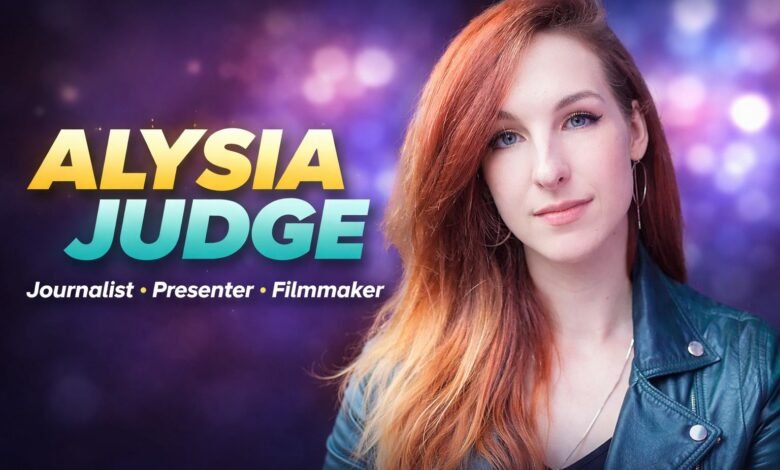
Alysia Judge has built a career that moves across several demanding parts of the media world without losing a clear identity. She first became known through games journalism and presenting, then expanded into editing, directing, and documentary work, creating a public profile that blends critical thinking with strong on-screen communication. Her official biography describes her as a journalist-turned-filmmaker, while public speaker profiles place her among the best-known UK voices working around gaming, culture, and entertainment.
What makes her biography worth reading is not just the list of brands attached to her name, but the way her work has evolved. Instead of remaining in one narrow lane, she has moved from reporting on games and technology to shaping visual stories as an editor and director, while still appearing as a host, commentator, and speaker in major public spaces.
The quick bio below is based on her official bio, University of York alumni record, public speaker profiles, and publicly listed screen credits.
Quick Bio
| Field | Details |
|---|---|
| Full Name | Alysia Judge |
| Base | London, United Kingdom |
| Profession | Journalist, presenter, producer, editor, director, and filmmaker |
| Education | BA English, University of York |
| Known For | Games journalism, media hosting, BAFTA-related presenting, and documentary-focused film work |
| Career Areas | Video games, entertainment, film, technology, culture, and education |
| Languages | English and fluent Spanish |
| Public Credits | IGN UK Podcast, Paradise Killer, Lee: The True Story |
| Current Creative Direction | Editing, directing, and developing film work tied to culture and politics |
Early Foundations and Education
A strong writing background often becomes the quiet engine behind a long media career, and that pattern fits here. Public records from the University of York identify her as a BA English graduate from 2013, which gives an academic foundation that aligns naturally with her later work in criticism, reporting, storytelling, and public speaking.
That educational path matters because it helps explain why her public work has never been limited to surface-level entertainment coverage. Even when discussing games and digital culture, her career has leaned toward analysis, communication, and narrative structure, all of which are easier to build when language and interpretation are already central strengths. This is an inference from her documented education and professional output.
How Her Career Began
The earliest clearly documented stage of her professional path sits in journalism and publishing tied to technology and games. PocketGamer.biz reported in 2015 that she joined as news editor after earlier work as a staff writer at ITProPortal, where she focused on mobile and consumer technology with a business angle.
That move is important because it shows a practical beginning rather than an overnight leap into visibility. Before appearing as a widely recognized host or speaker, she was already building newsroom experience, writing skills, and subject knowledge in sectors where technology, audience behavior, and fast-moving news all matter.
From Tech Writing to Games Journalism
By 2016, MCV listed her as Video Host at IGN UK and noted that she had been working in the industry since 2012. The same profile also described earlier freelance work across outlets such as Sky News, BBC Radio 1, Al Jazeera, Official PlayStation Magazine UK, TechWeek Europe, GameReactor, and GamesMaster, showing that her reputation was already growing across multiple media formats.
This stage of her biography reveals a useful pattern: she did not build authority from one platform alone. Instead, she moved through reporting, editing, hosting, and freelance contributions, which gave her both editorial credibility and public visibility. That combination later became one of the strongest features of her professional identity.
Building a Name in Games Media
Public speaker profiles consistently describe her as one of the UK’s leading broadcasters and speakers on gaming. They also present her as an award-winning journalist, presenter, and producer whose work spans video games, entertainment, technology, cultural analysis, women in tech, and education.
That description is supported by the range of organizations linked to her work. Across public profiles, her name is associated with BBC, IGN, The Guardian, BAFTA, Netflix UK, Nintendo, Channel 4 News, and Al Jazeera, which suggests a career built not only on subject expertise but also on trust from major institutions and media brands.
On-Screen Hosting and Public Commentary
One of the clearest signs of that trust is her repeated connection to BAFTA events and games-related public programming. Speaker and event profiles say she has regularly hosted BAFTA’s Game Awards and masterclasses, while University of York’s alumni page lists her as a presenter and jury member at BAFTA, as well as a producer, video editor, and presenter at Netflix and a live presenter at Nintendo.
She has also been identified as a video games expert invited onto Channel 4 News, the BBC, and Al Jazeera. That matters because it moves her profile beyond specialist circles and into wider public conversation, where games are discussed not only as products but also as culture, politics, education, and identity.
Shift into Filmmaking and Editorial Work
A major turning point in this biography is the move from journalism-centered work into filmmaking. On her official site, she describes herself as a journalist-turned-filmmaker who specializes in stories of quiet resistance, and says she now works as a director and editor on documentaries and commercial projects for clients including Netflix, Disney, and Sky.
That shift does not look like a break from her earlier career. Instead, it looks like an expansion of the same strengths into a more visual form. Reporting gave her research discipline and a sense of story; directing and editing allow those instincts to work on screen, where tone, pacing, and emotional detail become just as important as facts. This is an interpretation grounded in her documented career progression.
Creative Style and Subject Focus
Her official biography is unusually clear about the kind of work she wants to make. It says she specializes in stories of quiet resistance and is currently developing a film about the intersection of video games and politics, which points toward a creative identity shaped by social meaning rather than by pure commercial branding.
That focus helps explain why her public reputation feels broader than a standard presenter profile. She is connected to games, but not in a shallow way. The through-line in her work is the idea that entertainment can carry social, emotional, and political weight, which is one reason her writing, hosting, and filmmaking sit together so naturally.
Notable Work and Professional Reach
Public credits and profiles point to several recognizable markers in her career. IMDb lists her among the names attached to IGN UK Podcast, Paradise Killer, and Lee: The True Story, while speaker pages add that she produced and scripted The Gaming Show for BBC Radio 1 and has created popular videos for Netflix’s UK YouTube channel.
These credits matter because they show range rather than repetition. Podcasting, games, event hosting, journalism, and documentary work all require different skills, yet her public profile holds them together through a recognizable set of strengths: communication, subject expertise, and a consistent ability to translate complex ideas into engaging media.
Why Her Career Matters
A strong biography should explain not only what someone has done, but why the pattern of their work matters. In this case, the answer lies in the bridge she creates between gaming culture and mainstream media. She has helped position games as a serious space for discussion, creativity, and public thought, rather than treating the subject as a niche interest with limited cultural value.
That is especially relevant in modern media, where audiences want voices that understand both entertainment and the systems around it. Her career reflects that demand. She can report, host, speak, edit, and direct, but more importantly, she can connect those forms in a way that feels informed rather than forced. That is a meaningful professional advantage in a media environment that can be crowded, fast, and unforgiving.
Conclusion
Alysia Judge stands out because her career shows steady growth without losing coherence. From newsroom work and games journalism to public presenting and documentary filmmaking, she has built a profile based on credibility, versatility, and a clear interest in the cultural power of entertainment.
For readers searching for a serious biography, the most important fact is not one single title or platform. It is the way her work has developed across media while staying rooted in storytelling, analysis, and communication. That is why this career remains both impressive and still in motion.
Read this too: Jemma Forte: A Multifaceted Career of Television, Writing, and Political Commentary
FAQ
Who is Alysia Judge?
Alysia Judge is a London-based journalist, presenter, producer, editor, director, and filmmaker known for work connected to games media, entertainment culture, and documentary storytelling. Public profiles describe her as a journalist-turned-filmmaker and one of the UK’s leading gaming broadcasters and speakers.
What is Alysia Judge known for?
She is known for games journalism, media hosting, BAFTA-related presenting, Netflix UK video work, and a wider career that connects video games with film, culture, and public discussion. Public credits also connect her to IGN UK Podcast, Paradise Killer, and Lee: The True Story.
What is her educational background?
Her publicly confirmed education is a BA in English from the University of York, completed in 2013. That academic background aligns closely with the writing, editorial, and storytelling work seen across her career.
Has she worked outside journalism?
Yes. Her official biography shows a clear move into directing and editing, and states that she now creates documentary and commercial work for clients including Netflix, Disney, and Sky. That means her career extends well beyond reporting into full visual storytelling.
Why is her career considered important in games media?
Her career is significant because she has helped bring games into wider cultural and media conversations. Through journalism, hosting, public speaking, and filmmaking, she has treated gaming as a serious creative and social subject rather than a minor entertainment niche.