
Sade Malone: The Remarkable Rise of a British-Irish Actress
Gifted, grounded, and increasingly hard to ignore, yet still one of the most underrated young performers working across screen and stage.

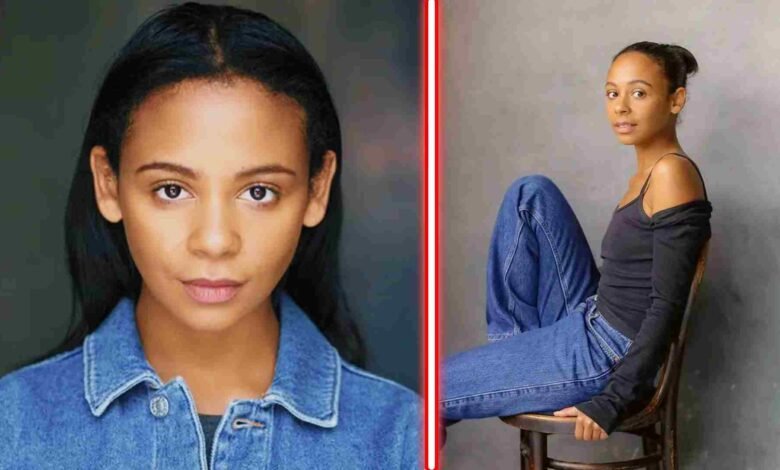
Table of Contents
ToggleIntroduction
Sade Malone is one of those actresses whose career feels carefully earned rather than suddenly manufactured. She first became familiar to many viewers through children’s television, but her later work in drama, film, theatre, and radio has shown a much wider artistic range. That steady expansion gives her biography real substance and makes her story especially interesting for readers who want more than a surface-level celebrity profile.
What stands out most is the way Sade Malone has moved from an early television breakthrough into more demanding creative spaces without losing authenticity. Her credits now connect youth television, serious acting training, festival film, major stage roles, and voice work for radio. That kind of path suggests discipline, adaptability, and a performer whose best years may still be ahead.
Quick Bio
| Quick Bio | Details |
|---|---|
| Full Name | Sade Malone |
| Profession | Actress |
| Background | British / English-Irish performer with Irish and Barbadian family roots |
| Birthplace | Rochdale, Greater Manchester, England |
| Early Upbringing | Rochdale, Dublin, and Leeds |
| Education | Liverpool Institute for Performing Arts (LIPA) |
| Scholarship | BAFTA Scholarship recipient |
| Early Breakthrough | Agnes Addo in 4 O’Clock Club |
| Known For | 4 O’Clock Club, Hope Street, Twig, Sive, My Left Nut, Pistol |
| Work Areas | Television, film, theatre, and radio drama |
Early Life and Family Background
Sade Malone was born in Rochdale, Greater Manchester, and spent much of her early life moving between England and Ireland. Trade coverage and interviews show that she lived in Dublin as a child before later settling in Leeds. This background matters because it helps explain the cultural flexibility that runs through her work. She is described in coverage as English-Irish, and interviews also note that her mother’s side is Irish while her father’s side is from Barbados.
That combination of places and family roots gives her biography unusual depth. Instead of growing up in one fixed environment, she developed across different cities and identities, and she has spoken about adapting to accents and surroundings while growing up. For an actor, that kind of experience can sharpen empathy, observation, and versatility, all of which appear strongly in the roles she has taken on so far.
Education and Professional Training
A major turning point for Sade Malone came with her acting studies at the Liverpool Institute for Performing Arts. Official LIPA and BAFTA records show that she studied there and received a BAFTA Scholarship during her final-year training. That support was more than a financial boost. It also came with mentoring and valuable industry access, confirming that her talent was already being recognised at a serious level before her post-training career fully opened up.
This training period helped bridge the gap between youthful screen work and long-term professional development. Bristol Old Vic and Screen International both note that Naomie Harris was her nominated BAFTA mentor, while Screen reports that she secured representation through her final-year showcase. That sequence of scholarship, mentorship, and representation gave Sade Malone a strong entry into the industry and placed her on a more secure path than many emerging performers enjoy.
How the Career Began
The screen career of Sade Malone started early. According to her official agency profile and BAFTA scholarship materials, she landed the regular role of Agnes Addo in the BAFTA-winning CBBC series 4 O’Clock Club at the age of 14. She remained with the show across four series, and that length of involvement gave her valuable practical experience in front of the camera long before drama school.
This early work became a foundation rather than a label. Many young actors struggle to move beyond the image created by a childhood role, but she used that first break as a launch point. The professionalism required to work on a recurring television production seems to have given her both discipline and confidence, and those qualities can be seen in the range of work that followed.
Television and Film Career Overview
After training, Sade Malone built a broader screen career that moved well beyond her first breakthrough. Her official agency profile and theatre-based credits connect her with productions such as Hope Street, Pistol, Frank of Ireland, My Left Nut, Tin Star, The Queen and I, Rig 45, and Casualty. Taken together, these roles present Sade Malone as a versatile performer who can work comfortably across drama, comedy-drama, ensemble storytelling, and more mainstream television formats.
One of the clearest signs of growing momentum came when Sade Malone took the title role in Twig. The film opened the 2024 Dublin International Film Festival, and that exposure gave her a stronger profile among critics and industry observers. Leading a festival opening film is important because it places an actor in a more visible and demanding position, especially when the performance has to carry both emotional and symbolic weight.
What makes her screen record especially impressive is that it does not rely on a single popular credit. Instead, it shows steady accumulation: early youth television, respected television drama, independent film, and recurring appearances in recognised productions. That pattern gives the career of Sade Malone a sense of structure and credibility that is often missing from biographies built around hype alone.
Theatre Work and Stage Strength
The stage side of the career is just as important. Sade Malone has played the title role in Sive at Dublin’s Gaiety Theatre and Stella in A Streetcar Named Desire. Her official profiles also list stage work in Lord of the Flies, Cuckoo, Private Lives, and Seasons in the Sun. These are not minor additions to a screen biography. They show an actress willing to take on text-heavy, emotionally demanding, and stylistically varied material.
This theatre record adds real weight to the profile of Sade Malone because stage performance tests an actor in a different way. There is no editing, no close-up to rescue a weak moment, and no room to hide behind production scale. Strong theatre work suggests command, focus, vocal control, and emotional stamina. That is one reason her stage credits matter so much when assessing her long-term potential.
Radio Work and Performance Range
Another valuable part of the story is voice performance. Her agency profile lists BBC radio productions including Candour, OK Boomer, Reasons to Stay Alive, Trust, The Human Way, Women of Troy, No Place but the Water, Fault Lines: Money, Sex and Blood, Brief Lives, and Torn. LIPA’s acting page also notes that she was nominated for Best Debut at the 2020 BBC Audio Drama Awards.
Radio drama is often overlooked in entertainment articles, yet it reveals a great deal about technical skill. Voice-only performance demands precision, timing, and emotional intelligence without visual support. For Sade Malone, this part of the career reinforces the idea that she is not simply camera-friendly but genuinely well trained across performance forms. It also shows that her growth has been based on craft as much as visibility.
Why Her Career Stands Out
One reason her career already feels notable is balance. She has roots in children’s television, but she also has formal conservatoire training, respected theatre work, independent film credibility, and radio experience. That combination is rare because many actors become associated with only one medium or one type of role. Her profile looks stronger because it has been built across multiple spaces at once.
There is also a thoughtful quality to the way she speaks about performance and identity. Interviews around Sive and Twig show that she is attentive to questions of black Irishness, representation, and the emotional truth of a role. That depth does not replace talent, but it strengthens the impression that Sade Malone is building a serious career rather than chasing short-term attention.
Recent News and Recognition
Recent industry recognition has pushed her profile higher. Screen International named Sade Malone one of its Stars of Tomorrow 2024, an honour that often highlights actors expected to make a larger impact in the years ahead. Bristol Old Vic also highlights that recognition, which helps confirm that her rise is being noticed across respected creative institutions, not only in entertainment press.
That momentum continued into 2025, when the Irish Independent noted her appearance in Mike Finn’s play Wreckquiem at Lime Tree Theatre in Limerick. This matters because it shows that the strong year around Twig and Sive was not a brief peak. Instead, she continued working in meaningful productions, keeping her stage career active while her screen reputation remained strong.
Conclusion
Sade Malone has built a biography that feels substantial, modern, and genuinely earned. From 4 O’Clock Club to Hope Street, from BAFTA-backed training to the title role in Twig, she has developed through television, film, theatre, and radio with clear purpose. Her career already reflects range, discipline, and a willingness to keep growing rather than repeat what first worked.
What makes her especially compelling is that she has already achieved enough to be taken seriously, yet there is still obvious room for further expansion. She is no longer simply a promising young actress, but she also does not feel fully defined by one breakout period. That balance between achievement and possibility is exactly why her story attracts attention and why her name is likely to remain important in British and Irish acting.
Read this too: Máiréad Tyers: Remarkable Rise of a Cork Actress With Real Star Power
FAQ
Who is she?
Sade Malone is a British or English-Irish actress known for work across television, film, theatre, and radio drama. Her credits include 4 O’Clock Club, Hope Street, My Left Nut, Pistol, Twig, and Sive.
Where is Sade Malone from?
She was born in Rochdale, Greater Manchester, and spent part of her childhood in Dublin before later living in Leeds.
What did she study?
She studied acting at the Liverpool Institute for Performing Arts and received a BAFTA Scholarship during her training.
What is she best known for?
She is widely known for playing Agnes Addo in 4 O’Clock Club, for television work including Hope Street, and for leading both the film Twig and the stage production Sive.
Why is Sade Malone considered a rising actress?
She is seen as a rising actress because of her range across mediums, her respected training background, her lead role in Twig, major stage performances, and recognition as a Star of Tomorrow 2024.
Agar chaho, main ab isi ke liye meta description, 5 tags, category, permalink, aur best link placement bhi de deta hoon.