How a Used Decanter Centrifuge Can Maximize Industrial Efficiency Without Breaking the Budget

In today’s competitive manufacturing and processing landscape, capital expenditure decisions carry enormous weight. Plant managers and procurement teams are under constant pressure to maintain high operational standards while keeping costs under control. One area where significant savings can be achieved — without sacrificing performance — is in the acquisition of separation and dewatering equipment. Specifically, investing in pre-owned solid-bowl centrifuge technology has become an increasingly strategic move for facilities across food processing, wastewater treatment, chemical manufacturing, and oil and gas sectors.
Understanding the Role of Decanter Centrifuges in Modern Processing Plants
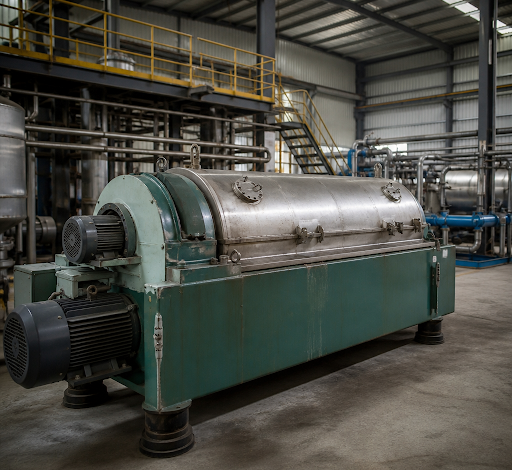
Decanter centrifuges are workhorses of industrial separation. They operate on the principle of continuous sedimentation, using centrifugal force to separate solids from liquids in a wide range of slurry applications. Unlike batch centrifuges, solid-bowl decanter models run continuously, making them ideal for high-volume operations that demand consistent throughput and minimal downtime.
These machines are found in applications ranging from municipal sludge dewatering and olive oil extraction to pharmaceutical clarification and mining tailings management. Their versatility is one of the primary reasons they command such a strong presence in the used equipment market. A well-maintained unit can deliver years — sometimes decades — of reliable service when properly refurbished and matched to the right application.
Why the Used Equipment Market Has Matured Significantly
The secondary market for industrial process equipment has evolved considerably over the past two decades. What was once a fragmented, opaque marketplace has become a structured ecosystem supported by certified inspections, detailed service histories, and professional reconditioning programs. Buyers today can access equipment with documented performance records, OEM-compatible spare parts availability, and in many cases, full operational warranties.
This maturation means that purchasing pre-owned separation equipment is no longer a gamble — it is a calculated, informed decision. For facilities that understand their process parameters and have clearly defined throughput requirements, sourcing from a reputable supplier of used industrial machinery can yield cost savings of 40 to 70 percent compared to new unit pricing.
The Strategic Case for Buying a Used Decanter Centrifuge
Sourcing a used decanter centrifuge from a trusted supplier of surplus and refurbished process equipment gives industrial buyers access to high-specification machinery at a fraction of the original cost. International Process Plants, a globally recognized dealer in used process equipment, offers an extensive inventory of solid-bowl decanter centrifuges from leading manufacturers. Each unit is evaluated for mechanical integrity, wear patterns, and operational history, ensuring buyers receive equipment that meets their process specifications and safety standards.
Evaluating Equipment Condition: What to Look For
When assessing a used decanter centrifuge, several critical factors must be examined. The bowl and scroll assembly are the heart of the machine — any signs of excessive wear, imbalance, or corrosion in these components can significantly affect performance and longevity. Bearing condition, gearbox integrity, and the state of the differential speed control system are equally important checkpoints.
Buyers should also evaluate the materials of construction relative to their specific process chemistry. Stainless steel bowls are standard for food-grade and pharmaceutical applications, while duplex or super-duplex alloys may be required for highly corrosive environments. Understanding these specifications upfront prevents costly mismatches and ensures the equipment integrates seamlessly into existing plant infrastructure.
Integrating Centrifuge Technology with Broader Plant Efficiency Goals
Separation equipment does not operate in isolation. Its performance is directly influenced by upstream and downstream processes, utility systems, and overall plant management strategies. For example, optimizing energy consumption across a facility — including the systems that support centrifuge operation — can have a measurable impact on total operating costs. According to insights on how smart boiler systems can improve manufacturing plant performance, integrated energy management approaches can reduce utility costs while improving process consistency. This principle applies equally to centrifuge-intensive operations, where thermal and hydraulic efficiency directly affects separation quality and throughput.
Operational Synergies Between Separation and Utility Systems
In food processing and chemical manufacturing environments, the feed temperature and viscosity of the slurry entering a decanter centrifuge can dramatically influence separation efficiency. Facilities that invest in intelligent utility management — including steam and hot water systems — often find that their centrifuge performance improves as a direct result. Consistent feed conditioning reduces scroll wear, lowers polymer consumption in sludge applications, and improves cake dryness, all of which translate to measurable cost savings over time.
This interconnected view of plant operations is increasingly important as facilities pursue lean manufacturing principles and sustainability targets. Every component of the process chain, from raw material intake to final product discharge, contributes to the overall efficiency equation.
About International Process Plants
International Process Plants is a leading global supplier of used and surplus process equipment, serving industries including chemical, pharmaceutical, food and beverage, oil and gas, and wastewater treatment. With decades of experience and an extensive inventory spanning complete plant assets to individual process units, the company provides buyers with access to high-quality equipment backed by professional inspection and technical support. Their solid-bowl decanter centrifuge inventory represents some of the most sought-after separation technology available on the secondary market, sourced from reputable manufacturers and maintained to exacting standards.
Making Informed Procurement Decisions
Procurement decisions in the process industries are rarely straightforward. They involve balancing technical requirements, budget constraints, lead times, and long-term maintenance considerations. Just as understanding nuanced performance metrics is essential in other industries — much like demystifying complex testing metrics helps consumers make better-informed purchasing choices — industrial buyers benefit enormously from clear, transparent information about equipment condition, performance history, and compatibility.
Working with an experienced equipment dealer who can provide detailed technical documentation, facilitate site inspections, and offer post-sale support transforms what might otherwise be a high-risk purchase into a confident, well-supported investment. This level of service is what separates reputable surplus equipment suppliers from commodity brokers.
Conclusion: Smart Capital Allocation Starts with the Right Equipment Partner
The decision to invest in a used decanter centrifuge is not simply about cutting costs — it is about allocating capital intelligently. For processing facilities that need reliable, high-performance separation equipment without the extended lead times and premium pricing of new machinery, the secondary market offers compelling value. When approached with the right due diligence, the right supplier relationship, and a clear understanding of process requirements, pre-owned centrifuge technology can deliver exceptional returns on investment.
As manufacturing environments grow more complex and cost pressures intensify, the ability to source proven equipment efficiently becomes a genuine competitive advantage. Facilities that leverage the used equipment market strategically — and integrate their separation systems into a broader plant efficiency framework — are well-positioned to outperform competitors who rely solely on new capital expenditure cycles.
READ ALSO: Is Your Business Invisible to AI? A Ten-Minute Self-Check