
Kira Freije: Powerful Biography of a Visionary Sculptor Creating Beauty From Fragility
The inspiring story of a British contemporary artist whose work feels tender, mysterious, beautiful, and sometimes unsettling

Introduction
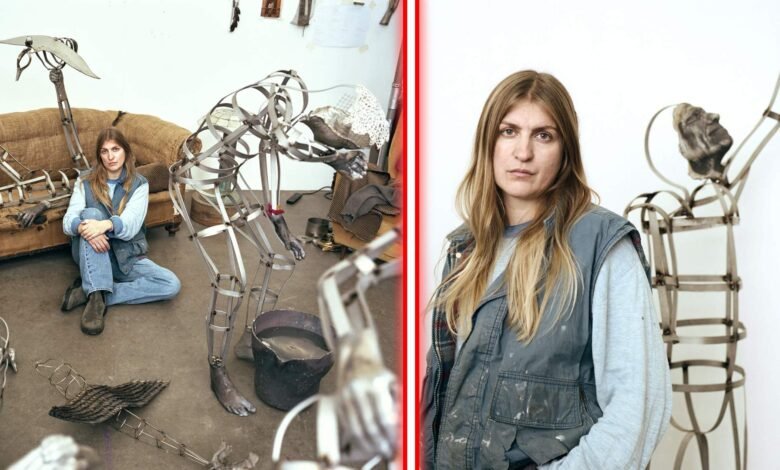
Kira Freije is a British contemporary artist and sculptor born in London in 1985. She is known for sculptural installations that use metal, fabric, light, glass, found objects, stainless steel, and cast aluminium to explore human emotion and physical presence.
The work of Kira Freije feels both powerful and fragile. It can look beautiful, but it also carries a quiet sense of fear, vulnerability, grief, and uncertainty, which makes her sculptures emotionally rich and memorable.
Quick Bio
| Field | Details |
|---|---|
| Real Name | Kira Freije |
| Profession | Contemporary Artist, Sculptor, Installation Artist |
| Birth Year | 1985 |
| Age | Around 40–41 years old in 2026 |
| Birthplace | London, United Kingdom |
| Nationality | British |
| Current Base | London, United Kingdom |
| Education | Ruskin School of Art, University of Oxford; Royal Academy Schools, London |
| Known For | Mixed-media sculptural figures and emotional installations |
| Main Materials | Metal, fabric, light, glass, found objects, stainless steel, cast aluminium |
| Main Themes | Emotion, vulnerability, tenderness, fear, memory, companionship |
| Source of Income | Artwork sales, exhibitions, gallery representation, commissions, collections, and artist projects |
Early Life and Background
Kira Freije was born in London in 1985. Her public biography identifies her as a London-born British artist whose creative work later developed around sculpture, installation, material experimentation, and emotional storytelling.
A known family detail linked to her public profile is that her surname has been connected to her Lebanese grandfather. Most of her public story, however, focuses on her education, studio practice, exhibitions, and growing role in British contemporary art.
Education and Artistic Training
Kira Freije studied at the Ruskin School of Art, University of Oxford, graduating in 2011. This education gave her a strong foundation in art history, visual thinking, and critical approaches to making art.
She later studied at the Royal Academy Schools in London, graduating in 2016. This period helped her develop a more personal artistic language and gave her room to experiment with sculpture, materials, figures, and installation-based work.
Start of Career
Kira Freije began building her career through art school training, early exhibitions, and a focused studio practice in London. Her work gradually gained attention because it used hard materials to express soft, emotional, and human subjects.
Her early career was shaped by gallery exhibitions, artist projects, and institutional recognition. Instead of creating simple decorative sculpture, she developed a practice based on figures, bodies, objects, and scenes that feel open to interpretation.
Complete Career Overview
Kira Freije works mainly as a sculptor and installation artist. Her sculptures often appear as life-size figures, bodies, animals, lamps, tools, companions, or theatrical characters placed inside emotional scenes.
Her career has grown through exhibitions in the United Kingdom and Europe. Over time, she has become known for work that connects contemporary sculpture with human feeling, material tension, memory, fear, tenderness, and physical presence.
Artistic Style and Creative Method
Kira Freije creates sculptures from materials such as metal, fabric, light, glass, found objects, stainless steel, and cast aluminium. These materials can seem cold or industrial, but she uses them to create figures that feel human, vulnerable, and alive.
Her work often shows exposed structures, cast forms, fabric elements, lights, and symbolic objects. This gives her sculptures a raw and poetic quality, as if the figures are unfinished, wounded, protective, or caught inside a private emotional moment.
Major Themes in Her Work
Kira Freije often explores emotion, companionship, tenderness, fear, grief, memory, and the human body. Her sculptures can feel gentle and unsettling at the same time, which gives her work a strong psychological effect.
She does not always tell a clear story. Instead, she builds scenes that invite viewers to feel something first and understand it slowly. This makes her work powerful for both casual visitors and serious followers of contemporary sculpture.
Materials and Visual Language
Kira Freije uses metal structures, fabric, glass, cast aluminium, found materials, and light to create a visual language that feels both physical and emotional. Her sculptures are often built with visible joints, supports, and surfaces, so the process of making remains part of the final artwork.
This visible construction matters because it connects the object to the human body. The figures may seem strong because of their metal forms, but they also appear delicate because of their poses, faces, fabrics, and emotional atmosphere.
Major Exhibition: Unspeak the Chorus
One of the most important exhibitions by Kira Freije is “Unspeak the Chorus” at The Hepworth Wakefield. The exhibition presented life-size sculptural figures and staged arrangements that explored human presence, vulnerability, and emotional connection.
The show helped bring her wider attention in the contemporary art world. It showed her ability to create a complete sculptural environment where figures, objects, materials, and space work together to create a mysterious emotional scene.
Why This Exhibition Matters
“Unspeak the Chorus” matters because it presents sculpture as more than physical form. The exhibition feels like a silent performance, where each figure seems to carry a feeling, a memory, or a private story.
For many viewers, the exhibition offered a strong example of how contemporary sculpture can speak without direct explanation. It also helped position Kira Freije as one of the notable British artists of her generation.
Turner Prize 2026 Recognition
Kira Freije was shortlisted for the Turner Prize 2026, one of the United Kingdom’s most important contemporary art awards. Her nomination was connected to “Unspeak the Chorus,” which became a major moment in her public career.
This recognition increased her visibility and placed her work in a wider national conversation about contemporary art. It also confirmed that her emotional, material-driven sculpture has gained serious attention from major art institutions.
Selected Exhibitions
| Year | Exhibition / Project | Location |
|---|---|---|
| 2016 | Our Tongues Are The Replaceable Filaments | Occidental Temporary, Paris |
| 2017 | The Dark Away | Recent Activity, Birmingham |
| 2023 | The Throat Is a Threaded Melody | E-WERK Luckenwalde |
| 2024 | Parcours 2024 | Museum Kleines Klingental, Basel |
| 2025–2026 | Unspeak the Chorus | The Hepworth Wakefield |
| 2026 | Unspeak the Chorus | Modern Art Oxford |
| 2026 | Turner Prize Exhibition | MIMA, Middlesbrough |
Source of Income and Professional Work
Kira Freije earns through her professional work as a contemporary artist. Her income sources include artwork sales, exhibitions, gallery representation, commissions, private collections, institutional collections, art fairs, and artist projects.
Her career is centered on sculpture, installation, and public exhibitions. She is not mainly known for corporate business ventures, but for a serious art practice built through galleries, museums, and contemporary art institutions.
Professional Associations
Kira Freije is publicly associated with galleries, museums, and art spaces that show, discuss, or support her work. These include The Approach, The Hepworth Wakefield, Modern Art Oxford, Tate, and E-WERK Luckenwalde.
These associations are important because contemporary artists often build recognition through exhibitions, critical writing, institutional support, and collection activity. Her growing presence in these spaces shows the strength of her artistic development.
Recent News and Public Attention
Kira Freije gained major recent attention through her Turner Prize 2026 shortlist nomination. This news introduced her work to a broader audience beyond specialist art circles.
Her exhibition “Unspeak the Chorus” also received attention for its emotional life-size figures, theatrical staging, and use of metal, fabric, glass, and found objects. The show strengthened her public image as a sculptor who creates work that feels human, strange, and deeply affecting.
Legacy and Impact
The legacy of Kira Freije is still developing because she is an active contemporary artist. Her current impact comes from her ability to use hard materials to express soft human feelings.
Her sculptures stand out because they carry both beauty and unease. Through figures, cast forms, fabric, light, and symbolic objects, she explores connection, fear, tenderness, memory, and the fragile nature of human experience.
Conclusion
Kira Freije is a British contemporary sculptor whose work has gained recognition for its emotional depth, material strength, and mysterious human presence. Born in London in 1985, she studied at the Ruskin School of Art and the Royal Academy Schools before developing a distinctive sculptural practice.
Her work matters because it turns metal, fabric, light, glass, and found objects into scenes of feeling. With exhibitions such as “Unspeak the Chorus” and recognition through the Turner Prize 2026 shortlist, Kira Freije has become an important artist to watch in contemporary British sculpture.
Read this too: Nick Goss: Powerful Story of a Visionary Painter Who Turns Lost Places Into Living Art
FAQs
Who is Kira Freije?
Kira Freije is a British contemporary artist and sculptor born in London in 1985. She is known for mixed-media sculptures and installations that explore human emotion, vulnerability, memory, tenderness, and fear.
What is Kira Freije known for?
She is known for life-size sculptural figures made with materials such as metal, fabric, light, glass, found objects, stainless steel, and cast aluminium. Her work often feels emotional, theatrical, and mysterious.
Where was Kira Freije born?
She was born in London, United Kingdom, in 1985. London is also where she lives and works.
What did Kira Freije study?
She studied at the Ruskin School of Art, University of Oxford, and later at the Royal Academy Schools in London. These institutions helped shape her development as a contemporary sculptor.
What are the main themes in her art?
Her main themes include human emotion, tenderness, fear, vulnerability, grief, companionship, memory, and the body. Her sculptures often create scenes that feel both beautiful and unsettling.
Why is Unspeak the Chorus important?
“Unspeak the Chorus” is important because it brought wider attention to her sculptural practice. The exhibition showed life-size figures and emotional arrangements that helped lead to her Turner Prize 2026 shortlist nomination.
What type of artist is she?
She is a contemporary artist, sculptor, and installation artist. Her practice focuses on mixed-media sculpture, figures, emotional spaces, and material storytelling.
Why is her work important?
Her work is important because it uses hard materials to express delicate human feelings. It combines sculpture, atmosphere, memory, and emotion in a way that feels both modern and deeply personal.