Sam Quek: From Olympic Rejection to Golden Glory and a Remarkable New Chapter
The inspiring story of the Liverpool-born field hockey defender who turned setbacks into history, then built a respected career in broadcasting, writing, and live sport presentation

Introduction
Sam Quek is one of those modern British sports figures whose story feels powerful because it is built on both pain and progress. She did not arrive at Olympic gold through a smooth path. Instead, her rise was shaped by years of development, difficult disappointments, and the kind of resilience that often defines elite athletes long before the medals appear.
What makes her biography especially interesting is that it does not end with sport. After reaching the summit in hockey as part of Team GB’s gold medal-winning side at Rio 2016, she moved into television, radio, live presenting, and publishing. That second chapter has made her more than a former athlete; it has made her a visible public figure with influence beyond the hockey pitch.
Quick Bio
| Field | Details |
|---|---|
| Full name | Samantha Ann Quek |
| Known as | Sam Quek |
| Date of birth | 18 October 1988 |
| Age | 37 |
| Birthplace | Liverpool, England |
| Nationality | British |
| Heritage | English and Singaporean Chinese |
| Profession | Former field hockey player, television presenter, radio host, author |
| Playing position | Defender |
| Education | BSc (Hons) Sport and Exercise Science, Leeds Metropolitan University |
| Spouse | Tom Mairs |
| Children | Two |
| Major sporting achievement | Olympic gold medal, Rio 2016 |
| Honour | MBE for services to hockey |
The Quick Bio above is based on Team GB, Leeds Beckett University, UK Sport, and established biographical reporting.
Early Life and Family Background
Born in Liverpool on 18 October 1988, she grew up with strong roots in both the city and the wider Merseyside area before the family later moved to the Wirral. Her background is part English and part Singaporean Chinese, and that mixed heritage forms an important part of her identity in public biographies. Early family life also included a twin brother, which adds an interesting detail to the competitive and energetic environment in which she was raised.
Her childhood was not shaped by glamour or celebrity. It was shaped by school, family, local sport, and the kind of ordinary routines that often produce extraordinary people. That grounded start matters because her later success feels earned rather than manufactured. She came through community and school pathways, not through a carefully staged media launch.
Education and Sporting Foundations
Her education shows that sport and study developed side by side. She attended Hillside Primary School, Birkenhead High School, and Calday Grange Grammar School before moving on to Leeds Metropolitan University, where she completed a BSc in Sport and Exercise Science. That academic background fits naturally with the discipline, fitness, and performance thinking required in elite hockey.
Hockey became serious while she was still at school. She entered trials at youth level, played within local development structures, and steadily moved through stronger competition. This is an important part of her story because it explains why she later looked so composed on the international stage. By the time global audiences noticed her, years of technical and mental preparation were already behind her.
The Start of Her Hockey Career
Youth Development and Early Promise
Her early career included success with England’s under-18 side and Great Britain youth competition. Those achievements were not just small junior milestones; they were signs that she belonged in serious international hockey. Winning gold at the 2007 Australian Youth Olympic Festival and competing at junior European level showed that her development was moving in the right direction.
That momentum carried into senior hockey at a young age. She won her first Great Britain cap in 2007 while still at university and made her England senior debut in 2008. These years matter because they mark the real beginning of her professional reputation as a defender capable of operating at the highest level.
Learning Through Disappointment
Not every important step in a sporting career is a victory. One of the defining early setbacks in her journey was missing out on the London 2012 Olympic squad. For many athletes, a disappointment of that size becomes the end of the story. For her, it became a turning point.
That missed opportunity adds weight to everything that came after. It gave her biography emotional depth, because when Rio arrived, the gold medal did not feel like a random triumph. It felt like the answer to a long period of persistence, discipline, and personal recovery from elite-level rejection.
Career-Defining Success with England and Team GB
Before Olympic gold, there were already major signs that she was becoming a central figure in top-level hockey. She helped England win European silver in 2013 and Commonwealth silver in 2014, and she later added European gold in 2015. These were not side notes; they were proof that she was part of a team and a generation moving toward something bigger.
Her role as a defender also mattered more than casual audiences sometimes realise. Defenders in field hockey often carry enormous responsibility without always receiving the spotlight enjoyed by attacking players. Her value came from structure, reading the game, discipline, and calmness under pressure. That is part of why her career is respected inside sport as well as outside it.
Rio 2016 and the Gold Medal Moment
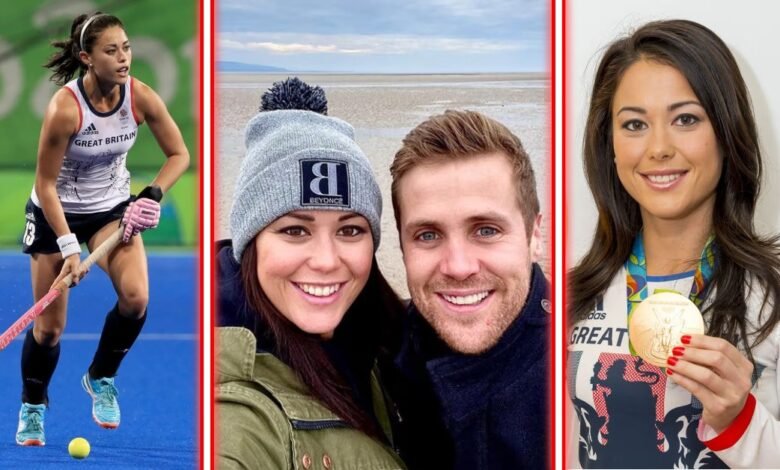
The greatest achievement of her playing career came at the Rio 2016 Olympic Games, where Great Britain won the women’s hockey gold medal. It was a historic result for Team GB and the defining image of her sporting legacy. Leeds Beckett highlighted her role in that Olympic run, and UK Sport later recognised all Rio gold medallists in the 2017 New Year Honours.
That triumph changed her public profile forever. Olympic winners are remembered differently, and in her case the impact was even greater because the journey contained visible adversity. She had moved from being overlooked for London 2012 to standing on top of the sport’s biggest stage. It is exactly the kind of career arc that continues to attract readers, viewers, and search interest years later.
Life Beyond Hockey
Retirement did not reduce her visibility; in many ways it expanded it. After Rio, she built a broadcasting career across television and radio, with work in sports presentation, studio coverage, and live event hosting. Public profiles and interviews show her involvement in football, rugby, NFL coverage, daytime television, and wider entertainment programming.
She also proved capable of working in mainstream entertainment rather than staying confined to a narrow sports lane. Appearances on shows such as I’m a Celebrity… Get Me Out of Here! and Celebrity MasterChef, along with later high-profile television work, helped her become familiar to audiences who may never have watched international hockey. That crossover success is a major reason her biography has lasting appeal.
A Growing Media Presence
Her broadcasting career has continued to evolve rather than standing still. In 2025, reporting confirmed that she joined ITV Racing’s Grand National Festival coverage, showing that her media work had expanded into another major British sporting environment. That move reinforced her reputation as a presenter who can connect with live audiences beyond her original sport.
This second career matters to her legacy because it shows range. Many Olympians are briefly celebrated and then fade from public view. She did the opposite. She used sporting credibility, communication skills, and on-screen confidence to build a broader professional identity that continues to develop.
Author, Public Voice, and Personal Life
Her public life is not limited to broadcasting. She also entered publishing with Hope and a Hockey Stick in 2018 and later released Roar: A Celebration of Great Sporting Women in 2024. These books matter because they show a shift from being the subject of a story to becoming one of its narrators. Through writing, she has contributed to wider conversations about sport, resilience, and female achievement.
In her personal life, she is married to Tom Mairs and is a mother of two. Interviews in recent years have shown her speaking openly about work, parenthood, and wellbeing, which has added another layer to her public image. Rather than appearing distant or overly polished, she often comes across as grounded, reflective, and direct.
Why Her Legacy Still Matters
Her legacy rests on more than a single gold medal. Of course, Rio 2016 will always be central, but the larger significance lies in how she represents persistence after disappointment, intelligent transition after sport, and modern visibility for women in public life. She stands as a strong example of an athlete whose best-known moment did not become her last meaningful contribution.
For younger athletes, her story offers a realistic kind of inspiration. It does not pretend that success arrives quickly or cleanly. It shows that rejection, delay, and pressure can exist alongside eventual achievement. That is why her biography continues to resonate: it is impressive, but it is also human.
Conclusion
Sam Quek remains a compelling figure because her life joins three powerful themes in one story: early dedication, world-class sporting achievement, and intelligent reinvention. She earned respect first as a field hockey defender, then as an Olympic gold medallist, and later as a broadcaster and author with a growing public profile.
That combination is why her biography attracts lasting attention. It contains struggle and success, local roots and national recognition, sporting excellence and media growth. In a crowded field of athlete life stories, hers stands out because it keeps moving forward.
FAQ
Frequently Asked Questions
Who is Sam Quek?
She is a British former field hockey player who won Olympic gold with Team GB at Rio 2016 and later built a career as a television and radio presenter.
What is Sam Quek’s real name?
Her full name is Samantha Ann Quek.
Where was Sam Quek born?
She was born in Liverpool, England, and later grew up across Merseyside and the Wirral.
What did Sam Quek study?
She studied Sport and Exercise Science at Leeds Metropolitan University, now Leeds Beckett University.
What is Sam Quek best known for?
She is best known for being part of the Great Britain women’s hockey team that won Olympic gold in 2016. She is also widely recognised for her later broadcasting career.
Is Sam Quek still active in the media?
Yes. Her recent work includes television presenting and, in 2025, joining ITV Racing’s Grand National Festival coverage.