Understanding 1.6T OSFP224 InfiniBand XDR DAC Cables: Architecture and Applications

The rapid growth of artificial intelligence (AI), large language models, and high-performance computing (HPC) is driving a fundamental transformation in data center networking. Modern AI workloads require thousands of GPUs to work together efficiently, creating enormous communication demands between compute nodes, switches, and storage systems. As AI clusters continue to scale, network interconnect technology has become just as important as computing performance, making higher bandwidth, lower latency, and improved power efficiency essential for next-generation infrastructure.
To support these demanding workloads, 1.6T InfiniBand DAC cables are emerging as a next-generation connectivity solution for AI and HPC environments. By combining twin-port 800G channels, advanced OSFP224 interfaces, and passive twinax copper technology, these cables provide ultra-high bandwidth and efficient short-distance connectivity for large-scale GPU clusters. They are designed to address the increasing communication requirements of modern AI systems while maintaining low latency and reduced power consumption.
Unlike traditional Ethernet networking environments, AI clusters require highly optimized interconnect architectures to support distributed computing. The adoption of 1.6T InfiniBand XDR DAC solutions enables faster GPU-to-GPU communication, helping improve training efficiency and maximize the performance of large-scale AI platforms.
What Is a 1.6T OSFP224 InfiniBand XDR DAC Cable?
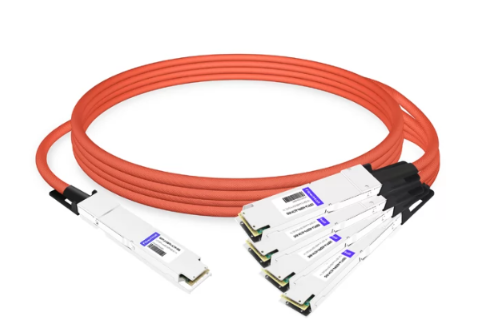
A 1.6T OSFP224 InfiniBand XDR DAC cable is a high-speed passive direct attach copper cable designed for next-generation AI data center networks. It uses twin-port OSFP224 connectors on both ends, with each port supporting 800Gb/s connectivity. By combining two 800G channels, the cable provides an aggregate bandwidth of 1.6Tb/s, making it suitable for high-performance AI and HPC applications.
The OSFP224 form factor is developed to support future high-speed networking requirements. Compared with previous-generation optical and electrical interfaces, OSFP224 is optimized for higher lane rates and improved bandwidth density. This allows networking systems to support increasing data volumes without requiring a significant increase in physical space.
The “DAC” in the product name refers to Direct Attach Copper technology. Unlike optical transceivers that convert electrical signals into optical signals, passive DAC cables transmit electrical signals directly through copper conductors. This architecture reduces complexity and power consumption, making DAC cables an ideal solution for short-distance connections inside AI clusters and high-performance computing environments.
Understanding InfiniBand XDR Technology
The Development of InfiniBand Networking
InfiniBand has long been recognized as one of the leading interconnect technologies for high-performance computing and AI infrastructure. Its evolution has focused on increasing bandwidth while maintaining extremely low latency and efficient data communication.
Previous InfiniBand generations include HDR with 200Gb/s connectivity and NDR with 400Gb/s connectivity. XDR represents the next generation, providing 800Gb/s per port and enabling significantly higher network capacity for large-scale AI systems. When combined with twin-port architecture, XDR-based solutions can achieve 1.6T aggregate bandwidth, supporting the growing communication requirements of advanced GPU clusters.
Why AI Systems Need InfiniBand XDR
AI training workloads rely heavily on distributed computing, where multiple GPUs must exchange large amounts of data during model processing. Any delay in communication can reduce GPU utilization and increase overall training time.
InfiniBand XDR provides technologies such as Remote Direct Memory Access (RDMA), efficient congestion management, and optimized data transfer mechanisms. These capabilities allow AI systems to achieve faster synchronization between GPUs and improve the efficiency of large-scale parallel computing.
Architecture of 1.6T OSFP224 DAC Cables
Twin-Port 2×800G Design
The key feature of a 1.6T OSFP224 InfiniBand XDR DAC cable is its twin-port architecture. Unlike a standard single-port 800G connection, this design integrates two 800G OSFP224 channels into a single cable assembly.
With two independent 800G links, the cable delivers a combined bandwidth of 1.6Tb/s. This high-density design helps reduce cable congestion in AI data centers while providing the bandwidth required for next-generation networking platforms.
The twin-port architecture is particularly valuable in environments where rack space, power efficiency, and cable management are critical considerations. By increasing bandwidth per physical connection, data centers can build more scalable network fabrics with fewer cable assemblies.
OSFP224 Interface Technology
OSFP224 is designed for the next generation of high-speed networking systems. The interface supports advanced electrical signaling capabilities required for 800G and beyond connectivity.
As AI clusters continue to expand, network equipment must support higher bandwidth within limited physical space. OSFP224 provides improved port density and electrical performance, making it suitable for future InfiniBand and AI networking architectures.
Passive Twinax Copper Technology
Passive twinax copper technology provides several advantages for short-distance AI interconnects. Because the cable does not require optical engines, laser components, or signal conversion modules, it consumes less power and introduces minimal transmission delay.
For large AI clusters containing thousands of high-speed connections, reducing power consumption at the interconnect level can significantly improve overall data center efficiency. Passive DAC cables also offer a cost-effective alternative for short-reach applications where optical transmission distances are unnecessary.
Advantages of 1.6T InfiniBand XDR DAC Cables
Ultra-High Bandwidth for AI Workloads
The biggest advantage of 1.6T DAC cables is their ability to provide extremely high bandwidth in a compact form factor. With 1.6Tb/s aggregate connectivity, these cables can support demanding AI workloads that require continuous communication between GPUs and networking equipment.
As AI models become larger and more complex, high-speed interconnects are essential for maintaining efficient distributed training performance.
Low Latency Communication
Latency is a critical factor in AI networking. GPU clusters often require frequent synchronization, meaning even small delays can impact computing efficiency.
Because passive DAC cables transmit electrical signals directly without optical conversion, they provide extremely low latency connections. This makes them ideal for high-performance AI environments where fast data exchange is required.
Lower Power and Cost Efficiency
Compared with optical solutions, passive DAC cables consume less power because they do not require active optical components. They also provide a more economical solution for short-distance connections.
This combination of low power consumption and reduced deployment cost makes 1.6T OSFP224 DAC cables attractive for large-scale AI infrastructure where thousands of connections may be required.
Applications of 1.6T OSFP224 InfiniBand XDR DAC Cables
AI GPU Clusters
The primary application of 1.6T InfiniBand XDR DAC cables is large-scale AI GPU networking. They are used to connect GPU servers, AI accelerators, and high-performance switches, enabling efficient communication between computing resources.
In AI training environments, fast interconnects allow GPUs to exchange data more efficiently and reduce bottlenecks caused by network limitations.
High-Performance Computing Systems
HPC applications such as scientific simulation, engineering analysis, and advanced research require extremely fast communication between computing nodes. InfiniBand XDR DAC cables provide the bandwidth and latency performance needed for these demanding workloads.
NVIDIA-Based AI Infrastructure
NVIDIA’s AI networking ecosystem relies heavily on high-performance interconnect technologies. Compatible OSFP224 InfiniBand XDR DAC cables provide a reliable connectivity option for advanced AI platforms, supporting scalable GPU clusters and next-generation AI factories.
Conclusion: 1.6T DAC Cables Enable the Future of AI Networking
As AI infrastructure continues to expand, the demand for higher-speed, lower-latency, and more efficient network connectivity will continue to grow. 1.6T OSFP224 InfiniBand XDR DAC cables provide a powerful solution by combining twin-port 800G connectivity, advanced OSFP224 interfaces, and low-power passive copper technology.
While optical interconnects remain essential for longer-distance networking, DAC cables will continue to play an important role in short-reach AI cluster connections. With the increasing adoption of large-scale GPU systems and next-generation InfiniBand architectures, 1.6T OSFP224 DAC solutions will become a key component in building scalable and high-performance AI data centers.