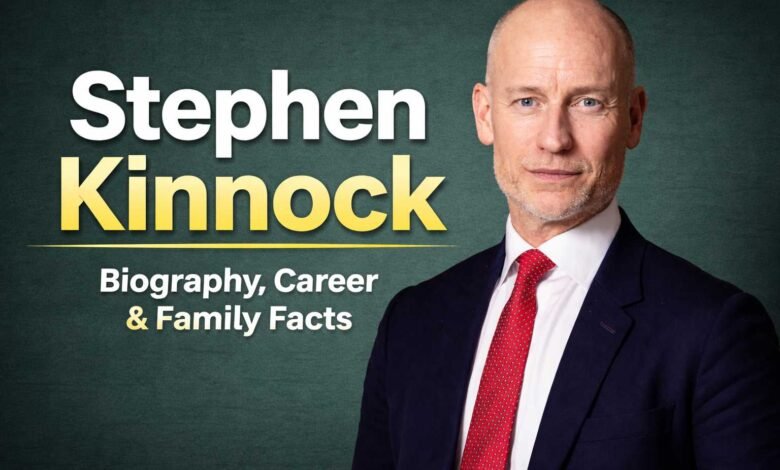
Stephen Kinnock: A Labour Advocate and Political Leader Shaping the Future of Care
Exploring Stephen Kinnock’s Political Journey, His Dedication to Social Care, and Impact on UK Politics

Introduction
Stephen Kinnock, a prominent figure in British politics, has carved a niche for himself as an advocate for social justice, healthcare reform, and community welfare. As the Member of Parliament (MP) for Aberafan Maesteg and the Minister of State for Care, he holds a pivotal role in shaping policies that directly affect the lives of the most vulnerable people in the UK. Stephen’s career is rooted in his family’s legacy of public service, with both of his parents—Neil Kinnock and Glenys Kinnock—holding significant positions in politics. Yet, Stephen has established himself not just as the son of political icons but as a leader in his own right.
This article delves into Stephen Kinnock’s early life, career development, his contribution to social care, and his vision for the future. It also examines his political influence, the challenges he faces, and his lasting impact on the policies that matter to millions of people.
Quick Bio of Stephen Kinnock
| Attribute | Details |
|---|---|
| Full Name | Stephen Nathan Kinnock |
| Born | January 1, 1970 |
| Nationality | British |
| Spouse | Helle Thorning-Schmidt (married in 1996) |
| Children | Two (Johanna and Milo) |
| Political Role | MP for Aberafan Maesteg, Minister of State for Care |
| Parents | Neil Kinnock (Father), Glenys Kinnock (Mother) |
Early Life and Background
Stephen Kinnock was born on January 1, 1970, in Tredegar, a small town in Monmouthshire, Wales. His family background played a crucial role in shaping his political views and career. His father, Neil Kinnock, served as the Leader of the Labour Party and was a prominent European Commissioner. His mother, Glenys Kinnock, was a Labour Member of the European Parliament and served as a government minister. Growing up in such an influential family, Stephen was exposed to the world of politics at a young age, and it was almost inevitable that he would follow a similar path.
Stephen attended Drayton Manor High School in London before pursuing his undergraduate studies at Queens’ College, Cambridge, where he earned a degree in Modern Languages. His academic pursuits laid the foundation for his future career in international relations. After completing his undergraduate education, he went on to obtain a Master’s degree from the College of Europe in Bruges, Belgium. This educational background equipped him with the skills necessary for navigating the complexities of global politics and diplomacy.
Stephen Kinnock’s Career Beginnings
Before diving into his political career, Stephen Kinnock built a distinguished professional background in international relations and business leadership. He worked with the British Council for over a decade, holding senior roles in cities like Brussels, St. Petersburg, and Sierra Leone. His time at the British Council helped him understand the dynamics of cultural exchange, foreign policy, and international diplomacy.
Stephen’s career in global affairs took another significant leap when he became the Director of the World Economic Forum for Europe and Central Asia in Geneva. During his tenure, he played a pivotal role in fostering cross-border partnerships between governments, businesses, and global leaders. His work at the World Economic Forum broadened his perspective on international collaboration and economic sustainability.
Later, he also became the Managing Director of Xynteo, a business advisory firm where he focused on leadership and innovation strategies. These experiences in business and diplomacy allowed Stephen to develop an extensive network and a well-rounded approach to leadership.
Political Career: From MP to Minister
Stephen Kinnock’s transition from international business to politics came naturally given his upbringing. He joined the Labour Party at a young age and, in 2015, was elected as the Member of Parliament for Aberafan, a constituency that includes the towns of Port Talbot and Maesteg. His election was part of the Labour Party’s effort to retain and strengthen its influence in key working-class areas of Wales.
Since becoming an MP, Kinnock has dedicated his work to issues such as social welfare, healthcare reform, and improving the quality of life for his constituents. In 2024, Kinnock’s career took another significant step when he was appointed as the Minister of State for Care under Prime Minister Keir Starmer. In this role, he is responsible for overseeing the adult social care system, primary care services, and dementia care policies in the UK.
As a Minister of State for Care, Stephen has played an instrumental role in advocating for more investment in the social care sector. He has worked to improve the pay and working conditions of care workers, recognizing their pivotal role in maintaining the health and dignity of elderly and vulnerable people. His position also involves ensuring the sustainability of the care system, which is often underfunded and overstretched.
Focus on Social Care: The Kinnock Legacy
One of Stephen Kinnock’s most significant contributions has been his emphasis on reforming social care. As the Minister of State for Care, he is responsible for driving forward policies that aim to improve access to care for the elderly and disabled, ensuring that they receive the highest possible standards of care.
Stephen has worked on multiple fronts to secure better funding for care services, focusing on reducing the disparities between wealthy and less affluent regions of the UK. He believes that everyone—regardless of their income or social status—should have access to quality care when they need it most. This mission aligns with his long-standing commitment to equality, a principle he has championed since his early days in politics.
In addition, Kinnock has been vocal about improving the conditions of care workers, who are often underpaid and overworked. He advocates for better training, career development, and fairer pay for those working in the care industry. This is crucial for ensuring that the social care sector is attractive to potential employees and can provide high-quality care to those in need.
Challenges and Criticisms
While Stephen Kinnock has gained recognition for his work in social care, his political career has not been without challenges. As a member of the Labour Party, Kinnock has often found himself at odds with certain factions of the party, particularly around policies on Brexit and the direction of the Labour Party under former leader Jeremy Corbyn.
Furthermore, some critics have pointed out that Kinnock’s approach to social care reform has been gradual, with some believing that the government has been too slow in addressing the critical gaps in the care system. However, Kinnock remains committed to improving social care and continues to push for comprehensive, long-term solutions.
Stephen Kinnock’s Impact on UK Politics
Stephen Kinnock’s influence on UK politics is not just limited to his role in social care. He has consistently pushed for a more progressive approach to economic inequality, climate change, and international relations. His global perspective, combined with his focus on local community issues, has earned him respect both within and outside the Labour Party.
As a politician, Kinnock embodies the values of public service, equality, and fairness. His career shows that he is not afraid to challenge the status quo and advocate for policies that will benefit the working class, vulnerable populations, and global citizens alike. His work on social care and community welfare will likely continue to define his legacy for years to come.
Conclusion
Stephen Kinnock is a dynamic figure in UK politics. From his international career in diplomacy to his work as an MP and Minister of State for Care, he has always been focused on the betterment of society. His commitment to social care reform, workers’ rights, and equality speaks to his core values. While he faces criticism at times, his influence continues to grow, and his ability to navigate complex political issues makes him an important figure to watch in the years ahead.
Read this too: Rachel Kinnock: A Remarkable Life of Purpose, Legacy, and Quiet Influence
FAQ
1. What role does Stephen Kinnock currently hold?
Stephen Kinnock is currently the Minister of State for Care and the MP for Aberafan Maesteg.
2. What is Stephen Kinnock’s stance on social care reform?
Stephen advocates for increased funding and better working conditions for care workers, with a focus on making care more accessible to all, regardless of financial status.
3. How did Stephen Kinnock get into politics?
Stephen Kinnock was inspired by his parents, Neil Kinnock and Glenys Kinnock, both of whom were influential figures in the Labour Party. He joined the party at a young age and was elected as MP in 2015.
4. How is Stephen Kinnock influencing UK politics?
Kinnock has been influential in promoting progressive policies, particularly around healthcare, social care, and workers’ rights.
5. What is Stephen Kinnock’s educational background?
Stephen Kinnock has a BA in Modern Languages from Queens’ College, Cambridge, and a Master’s degree from the College of Europe in Bruges, Belgium.