

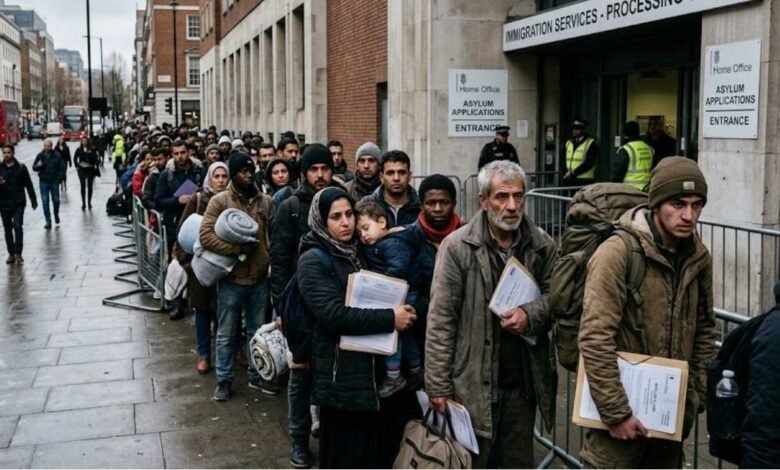
Every year, millions of people are forced to flee their homes due to danger and instability, but what exactly is an asylum seeker? Simply put, an asylum seeker is an individual who has left their country of origin in search of international protection from persecution, but whose claim for refugee status has not yet been legally decided.
Understanding this term is critical. In daily news and political discourse, words like “migrant,” “refugee,” and “asylum seeker” are frequently used interchangeably. However, under international law, these terms have very distinct legal meanings, rights, and processes attached to them.
This comprehensive guide explains everything you need to know about what it means to seek asylum. We will explore the legal definitions, the common reasons people flee their home countries, the standard steps involved in the asylum process, and the fundamental rights these individuals hold under international law.
The Legal Definition of an Asylum Seeker
At its core, an asylum seeker is someone claiming to be a refugee. They have crossed an international border to seek safety from serious human rights violations or persecution in their home country.
However, crossing a border and asking for help does not automatically grant someone refugee status. The individual must undergo a formal, legal evaluation by the host country’s government or the United Nations High Commissioner for Refugees (UNHCR).
During this waiting period—which can last anywhere from a few months to several years—the individual is legally classified as an asylum seeker. If their application is approved, a successful claim may result in recognition as a refugee or another form of international protection, depending on the host country’s legal system. If their application is denied, they may be required to leave the host country.
In short: Many people who are recognized as refugees first go through an asylum or refugee status determination process, but not every asylum seeker will ultimately be recognized as a refugee.
Asylum Seeker vs. Refugee vs. Migrant: What is the Difference?
One of the most common sources of confusion is the difference between various types of displaced people. Understanding these distinctions is vital for grasping how international immigration law works.
The Asylum Seeker
As established, this is a person who has fled their country, asked for protection, and is currently waiting for a government or international body to make a final decision on their case. Their legal status is pending.
The Refugee
A refugee is a person whose claim for asylum has been officially approved. Refugee status may be determined by national authorities. In certain countries or circumstances, the UNHCR may conduct the refugee status determination. In either case, this provides a legal recognition that returning this person to their home country would put their life or freedom at risk. Refugees are granted specific legal protections, assistance, and often a pathway to permanent residency or citizenship in the host country.
The Migrant
While the term migrant is often used to describe those who cross borders for better economic opportunities, education, or family reunification, migrants and asylum seekers or refugees are not completely mutually exclusive categories, nor do all migrants move voluntarily. However, generally speaking, if a migrant who moved for economic or educational reasons chooses to return home, they typically continue to receive the protection of their government. Asylum seekers and refugees do not have this safety net.
Why Do People Seek Asylum? The 5 Protected Grounds
To successfully transition from an asylum seeker to a recognized refugee, an individual must prove they meet the criteria established by the 1951 Refugee Convention.
According to this foundational piece of international law, an individual must have a “well-founded fear of being persecuted.” Furthermore, this persecution must be tied to one of five specific protected grounds:
1. Race
Individuals may face severe discrimination, violence, or systemic oppression based on their ethnic or racial background. This can include physical violence, denial of fundamental rights, or state-sponsored segregation.
2. Religion
Many asylum seekers flee countries where practicing their faith—or choosing not to practice a state-mandated religion—is a criminal offense. This can include the prohibition of religious worship, forced conversion, or violence against religious minorities.
3. Nationality
This ground covers persecution based on citizenship or lack thereof (statelessness), as well as persecution based on linguistic or cultural identity. It frequently overlaps with race and ethnicity.
4. Membership in a Particular Social Group
This is the most complex and frequently debated category in asylum law. A “particular social group” refers to a group of people who share a common, immutable characteristic that they cannot or should not be forced to change. Common examples include LGBTQ+ individuals fleeing countries where homosexuality is criminalized, or women fleeing extreme, systemic gender-based violence that their home government refuses to prevent.
5. Political Opinion
People who hold—or are perceived by their government to hold—political opinions that challenge the ruling authority often face imprisonment, torture, or death. Dissidents, journalists, and human rights activists frequently seek asylum under this category.
The Asylum Process: How It Generally Works
While the specific immigration laws and bureaucratic steps vary significantly from one country to another, the overarching process of seeking asylum follows a similar international framework.
Step 1: Arrival and Declaration
The process begins when an individual arrives at a port of entry (such as an airport or land border) or crosses into a country and declares their fear of returning home. In many jurisdictions, an individual can also apply for asylum if they are already inside the country on a different visa (such as a tourist or student visa) and conditions in their home country suddenly deteriorate.
Step 2: The Initial Screening
In some countries, border officials conduct an initial screening. While the “credible fear interview” is a term used in specific systems, particularly the United States, other countries may use different screening procedures. The purpose is not to decide the entire case, but to determine if there is a significant possibility that the person could establish a valid asylum claim. If they pass, they are allowed to proceed with a full application.
Step 3: Filing the Formal Application
The asylum seeker must submit a detailed, formal application to the host country’s immigration authorities. This application requires extensive documentation, personal testimony, and any available evidence of the persecution they faced (such as police reports, medical records, or news articles about their home country).
Step 4: The Asylum Interview or Court Hearing
This is the most critical step. The asylum seeker will have a lengthy interview with an asylum officer or appear before an immigration judge. They must tell their story clearly, consistently, and truthfully. The officer or judge will ask probing questions to verify the applicant’s identity, evaluate their credibility, and determine if their fear of persecution aligns with the legal definition.
Step 5: The Waiting Period
Because global immigration systems are heavily backlogged, asylum seekers often wait months or even years for a decision. During this time, they live in a state of legal limbo.
Step 6: The Final Decision
If the claim is successful, the individual may be granted asylum or another form of international protection, depending on the country’s legal system. If the claim is denied, the individual is usually issued a deportation or removal order, though they typically have the right to appeal the decision to a higher court.
Fundamental Rights of an Asylum Seeker
While waiting for their case to be processed, asylum seekers are protected by international law.
The most important of these protections is the principle of non-refoulement. This is a core principle of international human rights law that protects people from being returned to a territory where they would face persecution or serious threats to their life or freedom, subject to the applicable legal framework and exceptions. Even if an individual crosses a border irregularly or without proper documentation, they generally cannot be immediately deported without first hearing their asylum claim in accordance with these legal standards.
Additionally, asylum seekers have the right to humane treatment, basic dignity, and freedom from torture or arbitrary punishment.
Common Challenges Faced by Asylum Seekers
The journey does not end once an asylum seeker reaches a safe country. The process of proving their claim is fraught with systemic and personal challenges.
-
Complex Legal Systems: Asylum law is highly complex. Without access to competent legal representation, applicants can face significant difficulties navigating the legal paperwork and presenting a successful case.
-
Language Barriers: Most asylum seekers do not speak the primary language of their host country, making it difficult to find housing, communicate with authorities, or articulate their trauma to immigration judges.
-
Trauma and Mental Health: Fleeing persecution leaves deep psychological scars. Having to recount traumatic experiences—like torture or the loss of family members—in a sterile courtroom setting can be incredibly re-traumatizing.
-
Strict evidentiary burdens: Proving persecution is difficult. People fleeing for their lives rarely have the time or ability to gather police reports or government documents proving they are being targeted.
Can an Asylum Seeker Work or Access Benefits?
The ability of an asylum seeker to work legally or access government benefits depends entirely on the laws of the host country.
In some nations, asylum seekers are granted work permits almost immediately to help them become self-sufficient. In other countries, they are strictly prohibited from working for the first several months (or even years) of their waiting period.
When work is prohibited, asylum seekers must rely on community support, non-governmental organizations (NGOs), or meager government stipends. This forced inactivity can lead to poverty, social isolation, and extreme stress, highlighting a major point of debate in global immigration policy.
What Happens if an Asylum Application is Denied?
If a government determines that an applicant does not meet the legal criteria for refugee status, the asylum claim is denied.
This does not necessarily mean the applicant was lying. Often, it simply means their situation—such as fleeing generalized gang violence, famine, or extreme poverty—does not fit neatly into the five protected grounds outlined by the 1951 Refugee Convention.
When a claim is denied, the individual generally has the right to appeal the decision. If all appeals are exhausted and the denial is upheld, the individual loses their legal right to remain in the host country. At this point, they are subject to deportation and may be forcibly removed to their country of origin.
The Global Importance of Asylum
The right to seek asylum is a fundamental human right recognized by the Universal Declaration of Human Rights. The modern asylum system was established following World War II to create a formal international framework for protecting people fleeing targeted violence and persecution.
While the modern system faces heavy strain from global conflicts, climate change, and political polarization, the core concept remains vital. Providing a fair, thorough, and humane legal process for every asylum seeker is how the global community fulfills its moral and legal obligation to protect the world’s most vulnerable populations.
Read this too: Channel Rescue Dispute: The Facts Behind RNLI Boats Denied Port Entry
FAQ
What is the difference between an asylum seeker and a refugee?
An asylum seeker is someone who has asked for international protection but is still waiting for a legal decision on their case. A refugee is someone whose asylum claim has been officially approved, granting them legal protection and status in the host country.
Can an asylum seeker work while waiting for a decision?
This depends on the host country’s laws. Some countries allow asylum seekers to work immediately, while others enforce a waiting period. Work authorization rules and waiting periods vary significantly by country and legal system.
How long does the asylum process take?
The timeline varies drastically. Processing times vary significantly by country, case complexity, backlogs, and appeals. While some cases are resolved in a few months, it is common for cases to take several years for a final decision.
Can you seek asylum for economic reasons?
No. Fleeing poverty, famine, or seeking better job opportunities does not qualify an individual for asylum. Under international law, asylum is strictly reserved for those fleeing persecution based on race, religion, nationality, political opinion, or membership in a particular social group.
What happens if an asylum seeker’s application is denied?
If the application is denied, the individual usually has the right to file an appeal. If the final appeal is also denied, they are no longer legally allowed to stay in the host country and will face deportation back to their home country.