Natalie Clein: Powerful Biography of a Brilliant British Cellist Who Turned Early Fame Into a Lasting Classical Music Legacy
The inspiring story of a gifted cello artist, award-winning performer, respected professor, and creative classical musician whose career shows talent, discipline, and artistic courage.

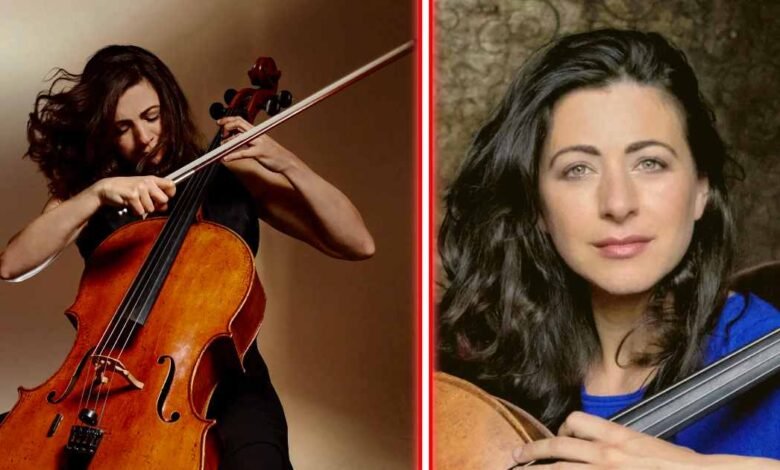
Table of Contents
ToggleIntroduction
Natalie Clein is a British classical cellist, professor, chamber musician, recording artist, and artistic director. She is best known for winning BBC Young Musician of the Year in 1994 and for building a respected international career in classical music. Her journey is powerful because it began with early success, but it also shows the pressure and responsibility that come with public recognition at a young age.
Natalie Clein has continued to grow as an artist through performances, recordings, teaching, chamber music, and festival leadership. Her work connects traditional cello repertoire with modern classical music, making her an important figure for audiences, students, and young musicians who want to understand the value of dedication in the arts.
Quick Bio
| Field | Details |
|---|---|
| Real Name | Natalie Clein |
| Date of Birth | 25 March 1977 |
| Birthplace | Poole, Dorset, England |
| Age | 49 years old, as of 21 May 2026 |
| Nationality | British |
| Profession | Classical cellist, professor, chamber musician, recording artist, artistic director |
| Main Instrument | Cello |
| Education | Talbot Heath School, Royal College of Music, further study with Heinrich Schiff in Vienna |
| Known For | BBC Young Musician 1994, Eurovision Competition for Young Musicians, international cello career |
| Sister | Louisa Clein |
| Children | Mother of two |
| Honour | OBE for services to music in 2021 |
| Instrument | “Simpson” Guadagnini cello of 1777 |
| Genre | Classical music |
Early Life and Musical Background
Natalie Clein was born on 25 March 1977 in Poole, Dorset, England. She grew up in a musical family, where classical sound and instrumental discipline were part of daily life. Her mother was a professional violinist, and her father was a passionate amateur viola player, so music was not a distant dream for her; it was part of her home environment.
She received her first small cello at the age of six, and this early connection with the instrument became the foundation of her future career. Her first public concert took place when she was ten years old in a church hall in Dorset. That early stage experience helped her develop confidence and a natural relationship with live performance.
Education and Training
Natalie Clein attended Talbot Heath School in Bournemouth, Dorset. Her school years gave her space to grow as both a student and a musician. During this period, her talent became increasingly clear, and she began moving toward a serious classical music path.
She later studied at the Royal College of Music in London, where she worked with respected teachers including Anna Shuttleworth and Alexander Baillie. She also received the Queen Elizabeth the Queen Mother Scholarship. After her studies in London, she continued her training in Vienna with the well-known Austrian cellist and conductor Heinrich Schiff.
Musical Foundation
The combination of British musical training and European study helped shape Natalie Clein into a thoughtful and expressive artist. Her education did not only improve her technical command of the cello; it also strengthened her understanding of interpretation, tone, structure, and emotional depth.
This training became important throughout her career because the cello demands both physical control and emotional honesty. A strong technique can impress listeners, but real musical communication needs maturity, imagination, and discipline. Natalie Clein’s development shows how education and natural talent can work together when guided by serious artistic purpose.
Career Breakthrough
Natalie Clein’s major breakthrough came in 1994 when she won BBC Young Musician of the Year at the age of sixteen. Her winning performance of Elgar’s Cello Concerto introduced her to a wide British audience and placed her among the most promising young classical musicians of her generation.
In the same year, Natalie Clein also won the Eurovision Competition for Young Musicians in Warsaw, becoming the first British winner of the competition. This achievement gave her international recognition and proved that her talent could reach beyond national borders.
Positive and Challenging Side of Early Fame
Winning major competitions at a young age can be a beautiful opportunity, but it can also bring serious pressure. The positive side was that Natalie Clein gained visibility, invitations, and respect early in life. The negative side was that she had to carry high expectations while still developing as a young person and musician.
Her career shows that early fame is not enough on its own. Many young artists win competitions, but only a few build long careers with depth and consistency. Natalie Clein’s story stands out because she turned a teenage victory into a serious lifelong musical journey.
Complete Career Overview
After her competition success, Natalie Clein continued to develop as a soloist and chamber musician. She made her Proms debut in 1997, performing Haydn’s Cello Concerto in C major with Sir Roger Norrington and the National Youth Chamber Orchestra of Great Britain. This appearance marked another important step in her growing public career.
Natalie Clein later became part of the BBC Radio 3 New Generation Artists scheme, a platform created to support outstanding young classical performers. This helped her reach broader audiences and strengthened her position in the classical music world.
Orchestral Performances
Natalie Clein has performed with leading orchestras in Britain and abroad. Her career includes work with orchestras such as the Philharmonia, Hallé, Bournemouth Symphony, City of Birmingham Symphony, Montreal Symphony, Orchestre National de Lyon, New Zealand Symphony, St Petersburg Symphony, and Orquesta Filarmónica de Buenos Aires.
She has also worked with major conductors including Sir Mark Elder, Sir Roger Norrington, Gennady Rozhdestvensky, Leonard Slatkin, and Heinrich Schiff. These collaborations show the professional level of her career and her ability to perform demanding repertoire with respected musical leaders.
Chamber Music and Artistic Collaborations
Chamber music has been an important part of Natalie Clein’s artistic identity. Chamber performance requires deep listening, balance, sensitivity, and trust between musicians. It is not only about individual brilliance; it is also about conversation through sound.
Natalie Clein has collaborated with major artists including Leif Ove Andsnes, Anthony Marwood, Martha Argerich, Ian Bostridge, Simon Keenlyside, Imogen Cooper, Lars Vogt, and Isabelle Faust. These collaborations show her versatility and her ability to work across different musical settings.
Contemporary Classical Music
Natalie Clein has also supported contemporary classical music. Her work includes connections with composers such as Thomas Larcher and Brian Elias. This part of her career is important because it shows that she is not limited to famous traditional works.
She has also taken part in cross-disciplinary projects with dancer Carlos Acosta, writer Jeanette Winterson, and director Deborah Warner. These projects show artistic curiosity and a willingness to connect classical music with movement, literature, theatre, and modern creative ideas.
Recordings and Discography
Natalie Clein has recorded for EMI Classics and Hyperion. Her recordings include important cello works, chamber pieces, and solo repertoire. These recordings allow listeners to experience her artistry beyond the concert hall and help preserve her interpretations for future audiences.
Her recorded works include music by Brahms, Schubert, Chopin, Rachmaninov, Elgar, Kodály, Bloch, Bruch, Saint-Saëns, Bridge, Clarke, and Beethoven. This range shows her ability to move between Romantic music, twentieth-century repertoire, solo cello works, and large-scale concert pieces.
Important Recordings
Some of her notable recordings include Brahms and Schubert cello sonatas, Chopin and Rachmaninov cello sonatas, Elgar’s Cello Concerto, Kodály solo cello works, Bloch and Bruch pieces, Saint-Saëns cello concertos, Bridge and Clarke cello sonatas, and Beethoven’s Triple Concerto.
These projects demonstrate musical range and serious artistic taste. Natalie Clein’s discography is not built around only one style; it reflects curiosity, discipline, and a strong relationship with both classic and less frequently performed repertoire.
Teaching and Professional Roles
Natalie Clein is also known for her teaching work. She has served as a cello professor at the Royal College of Music in London and at the Music Academy Rostock in Germany. Her teaching role is important because it allows her to pass knowledge, experience, and artistic discipline to younger musicians.
She also served as Artist in Residence and Director of Musical Performance at Oxford University from 2015 to 2019. In that role, she contributed to musical programming, performance culture, and educational development in an academic environment.
Festival Leadership
Natalie Clein is connected with the Purbeck International Chamber Music Festival as artistic director. This role shows her work as a curator and leader, not only as a performer. Festival direction requires artistic planning, collaboration, audience understanding, and a clear musical vision.
Through festival work, Natalie Clein helps bring chamber music to audiences in a meaningful way. Her leadership reflects a wider purpose: to support classical music as a living art form rather than a tradition locked in the past.
Awards and Honours
Natalie Clein has received important recognition throughout her career. Her early awards include BBC Young Musician of the Year and the Eurovision Competition for Young Musicians. These achievements made her one of the most visible young British classical performers of the 1990s.
In 2005, she received the Classical BRIT Award for Young British Performer. In 2021, Natalie Clein was awarded an OBE for services to music. This honour recognised her contribution as a performer, teacher, and respected figure in classical music.
Instrument and Musical Style
Natalie Clein plays the “Simpson” Guadagnini cello of 1777. A historic instrument like this carries depth, character, and a special sound quality that can shape a performer’s musical voice.
Her playing is often associated with expression, intensity, and thoughtful interpretation. She is not only known for technical skill but also for emotional communication. This balance between discipline and feeling is one reason her performances remain meaningful to classical music listeners.
Legacy
Natalie Clein’s legacy is built on more than one early success. She began as a teenage competition winner, but she developed into a mature artist with a broad career in performance, recording, teaching, and artistic leadership. Her journey proves that talent must be supported by long-term discipline.
She also represents the modern classical musician: someone who performs major repertoire, supports new music, teaches future artists, and creates thoughtful programmes for audiences. Natalie Clein’s influence continues through her recordings, students, concerts, and festival work.
Conclusion
Natalie Clein is a powerful example of a musician who turned early recognition into a lasting and meaningful career. From Poole, Dorset, to international concert stages, she has shown commitment to the cello, classical music, and artistic growth.
Her story has both inspiring and challenging sides. The inspiring side is her talent, awards, and global respect. The challenging side is the pressure of early fame and the constant demand to keep growing as an artist. Through dedication, education, and creative courage, Natalie Clein has built a respected place in the world of classical music.
Read this too: Magda Archer Biography: Powerful Art, Bright Nostalgia, and the Dark Wit Behind Her Creative Legacy
FAQ
Who is Natalie Clein?
Natalie Clein is a British classical cellist, professor, recording artist, chamber musician, and artistic director. She is known for her international performances and her contribution to classical music.
When was Natalie Clein born?
Natalie Clein was born on 25 March 1977 in Poole, Dorset, England.
What is Natalie Clein known for?
Natalie Clein is known for winning BBC Young Musician of the Year in 1994, winning the Eurovision Competition for Young Musicians, performing internationally, and teaching cello.
What is Natalie Clein’s nationality?
Natalie Clein is British.
Where did Natalie Clein study?
Natalie Clein studied at Talbot Heath School and the Royal College of Music. She also continued her studies with Heinrich Schiff in Vienna.
What instrument does Natalie Clein play?
Natalie Clein plays the cello. She is associated with the “Simpson” Guadagnini cello of 1777.
Does Natalie Clein have children?
Yes, Natalie Clein has publicly described herself as a mother of two.
What honour did Natalie Clein receive?
Natalie Clein received an OBE for services to music in 2021.