Colin Currie: Powerful Biography of a World-Class Percussion Visionary
An inspiring story of a Scottish artist who turned percussion into a world-class solo voice, while proving that even a difficult classical path can become powerful with discipline, courage, and creativity.

Introduction
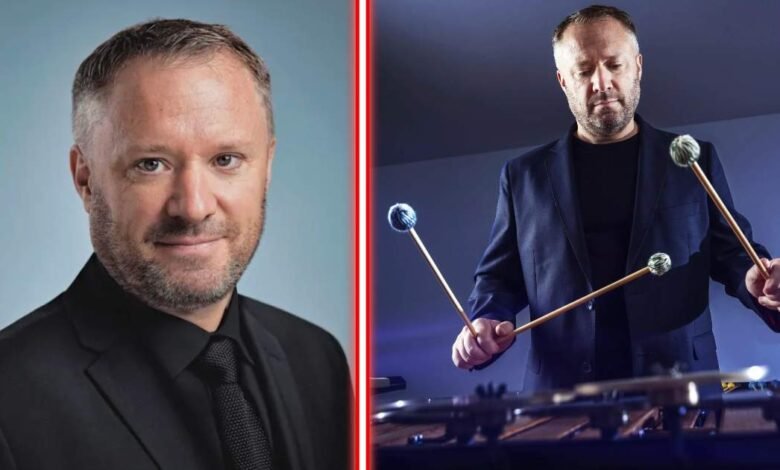
Colin Currie is a Scottish percussionist, conductor, chamber musician, educator, and one of the most respected names in modern classical percussion. He is admired for his strong musical identity, expressive performance style, and deep commitment to contemporary classical music.
The positive side of his journey is that Colin Currie helped bring percussion into the spotlight as a serious solo and chamber instrument. The negative side is that percussion is not always the easiest route for a classical solo career, because audiences often focus more on piano, violin, cello, or voice. Still, his career proves that talent and vision can change how people understand an instrument.
Quick Bio
| Field | Details |
|---|---|
| Real Name | Colin David Currie |
| Known As | Colin Currie |
| Date of Birth | 25 September 1976 |
| Age | 49 years old as of May 2026 |
| Birthplace | Edinburgh, Scotland |
| Nationality | Scottish / British |
| Profession | Percussionist, conductor, solo artist, chamber musician, educator |
| Main Instrument | Percussion |
| Education | Royal Scottish Academy of Music and Drama Junior Department; Royal Academy of Music |
| Known For | Contemporary classical percussion, solo performance, Steve Reich performances |
| Years Active | 1990s–present |
| Music Projects | Colin Currie Group, Colin Currie Quartet, Colin Currie Records |
| Main Income Sources | Concerts, conducting, recordings, teaching, commissions, collaborations, and music projects |
Early Life and Education
Colin Currie was born on 25 September 1976 in Edinburgh, Scotland. His full name is Colin David Currie. He began studying music at a young age, and this early beginning helped him develop rhythm, patience, discipline, and a serious understanding of sound.
His formal training included study at the Junior Department of the Royal Scottish Academy of Music and Drama from 1990 to 1994. Later, Colin Currie studied at the Royal Academy of Music in London and graduated in 1998. This strong education gave him the technical and artistic foundation needed for a demanding international music career.
Youth Orchestra Experience
During his early years, he played principal timpani and percussion with the National Youth Orchestra of Scotland. He also gained experience with the European Union Youth Orchestra, which helped him understand large ensemble performance at a high level.
These youth orchestra experiences were important because they prepared him for professional concert stages. They also helped him see percussion as more than a background section of the orchestra. For him, percussion became a full musical language with color, energy, emotion, and structure.
Start of Career
Colin Currie gained early recognition in 1992 when he won the Gold Medal of the Shell/LSO Competition. This achievement showed that he was not just a promising student but a serious young performer with strong artistic potential.
In 1994, he became the first percussionist to reach the final of the BBC Young Musician of the Year competition. This moment was important for his career and also meaningful for percussion as a classical instrument. It helped show wider audiences that percussion could stand confidently in a solo setting.
A Brave Artistic Direction
Choosing percussion as a main solo path was a bold decision. In classical music, the spotlight is often given to traditional solo instruments, so building a major career around percussion required extra creativity and persistence.
Colin Currie used that challenge as motivation. Instead of staying inside a narrow role, he built a wider artistic identity through solo performance, chamber music, conducting, and new music. His work helped open doors for percussionists who wanted to be seen as complete artists.
Complete Career Overview
Colin Currie is widely known for championing new music. His career includes solo concerts, chamber performances, conducting work, recordings, commissions, and collaborations with major composers. His musical approach combines technical control with emotional clarity and rhythmic strength.
He has performed with leading orchestras, including the London Philharmonic Orchestra, Royal Concertgebouw Orchestra, New York Philharmonic, The Cleveland Orchestra, Philharmonia Orchestra, and Orchestre Philharmonique de Radio France. These collaborations show his international reputation and his ability to perform at the highest level of classical music.
Work with Contemporary Composers
A major part of Colin Currie’s career is his connection with living composers and modern repertoire. He has worked with music by Steve Reich, Elliott Carter, Louis Andriessen, Sir James MacMillan, Jennifer Higdon, Einojuhani Rautavaara, Helen Grime, Rolf Wallin, Julia Wolfe, and Kalevi Aho.
This focus on contemporary music makes his career especially valuable. Colin Currie is not only performing existing works; he is also helping shape the future of percussion music. His performances and premieres have encouraged composers to think more seriously about percussion as a leading musical voice.
Colin Currie Group
In 2006, Colin Currie founded the Colin Currie Group. The ensemble is especially known for performing and recording music by American composer Steve Reich. The group has become an important force in contemporary classical performance because of its precision, energy, and rhythmic clarity.
The ensemble has performed at major venues and festivals, including London’s Southbank Centre, Barbican Centre, Cologne Philharmonie, Rotterdam De Doelen, Helsinki Festival, Paris Cité de la Musique, Fondation Louis Vuitton, Shanghai MISA Festival, and Esplanade Concert Hall Singapore. These performances show the group’s strong international reach.
Connection with Steve Reich
One of the most important parts of his artistic identity is his connection with Steve Reich’s music. Reich’s work often uses repeated patterns, layered rhythms, and changing textures, which require deep focus and exact ensemble control.
Through the Colin Currie Group, Colin Currie has helped keep this music alive for modern concert audiences. His interpretation of Reich’s music has strengthened his position as a leading figure in rhythm-based contemporary classical performance.
Colin Currie Quartet and Colin Currie Records
The Colin Currie Quartet is another important part of his creative work. The quartet focuses on percussion chamber music and helps expand the modern percussion repertoire. It gives space for detailed, focused, and highly expressive percussion performance.
Colin Currie also created Colin Currie Records, a recording platform connected with his percussion projects. This work is important because recordings help preserve modern classical percussion for future listeners, students, and musicians.
Creative Ventures in Music
His ventures are strongly connected with music rather than unrelated business fields. The Colin Currie Group, Colin Currie Quartet, and Colin Currie Records show his artistic entrepreneurship and his ability to build long-term platforms around percussion.
These projects also show leadership. He has not only performed music but also created structures that support new works, serious recording projects, and international collaboration. This makes Colin Currie an important cultural builder as well as a performer.
Awards and Achievements
Colin Currie has received several important honors during his career. His achievements include the Gold Medal of the Shell/LSO Competition in 1992 and his BBC Young Musician of the Year finalist recognition in 1994.
He also received the Royal Philharmonic Society Young Artist Award in 2000, was a BBC Radio 3 New Generation Artist from 2003 to 2005, received the Bortletti Buitoni Trust Award in 2005, and won the Royal Philharmonic Society Instrumentalist Award for 2014/2015. He is also connected with the Grammy-winning recording of Jennifer Higdon’s Percussion Concerto, which won Best Classical Contemporary Composition in 2010.
Teaching and Academic Work
Colin Currie is also involved in music education. He is connected with the Royal Academy of Music as Visiting Professor of Modern Ensembles. This role reflects his value as a mentor for younger musicians.
His teaching work matters because modern percussion needs more than speed or volume. It requires musical intelligence, timing, sensitivity, discipline, and an understanding of new repertoire. Through education, he helps prepare future performers for the technical and creative demands of contemporary classical music.
Recent Career Activity
For the 2025/26 season, Colin Currie is connected with major classical projects, including a new percussion concerto by Tansy Davies, performances with the Scottish Chamber Orchestra, and projects linked with Steve Reich’s 90th birthday celebrations in 2026.
These activities show that his career remains active and forward-moving. Rather than relying only on past achievements, he continues to build new collaborations, support new music, and bring percussion to important concert platforms.
Legacy and Influence
The legacy of Colin Currie is strongly connected with the rise of percussion as a respected solo and chamber instrument. He has helped prove that percussion can be emotional, dramatic, intelligent, and powerful enough to lead major concert programs.
His influence can be seen through his performances, recordings, commissions, teaching, and ensemble leadership. Colin Currie has inspired composers to write serious percussion works and has encouraged young musicians to see percussion as a complete artistic path.
Conclusion
Colin Currie has built a remarkable career through discipline, creativity, and belief in the power of percussion. From his early training in Scotland to his international performances with major orchestras, his journey shows how a focused artist can reshape the role of an instrument.
His story is inspiring because he turned a specialized musical field into a respected global platform. It also shows the difficult reality of classical percussion, where success requires constant innovation, technical skill, and audience understanding. Through his solo work, ensembles, recordings, and teaching, Colin Currie remains one of the most important percussion figures in modern classical music.
Read this too:Máiréad Tyers: Remarkable Rise of a Cork Actress With Real Star Power